Monday, July 13, 2009

Mailbox Monday - July 13

Marcia, the host of Mailbox Monday has the best description for this meme that I've heard yet:
Mailbox Monday is the gathering place for readers to share the books that came into their house last week (checked out library books don’t count, eBooks & audio books do). Warning: Mailbox Monday can lead to envy, toppling TBR piles and humongous wish lists.
(and boy, is she ever right about that!)

Just three books this week:
The Foretelling
Alice Hoffman

The jacket blurb:
Rain is a girl with a certain destiny, living in an ancient time of blood, raised on mares' milk, nurtured with the strength of a thousand Amazon sisters. A girl of power, stronger than fifty men, she rides her white horse as fierce as a demon.

But then there is the foretelling.
The black horse.

In truth, Rain tastes a different future in her dreams. She is touched by the stirrings of emotions unknown. She begins to see beyond a life of war...and wonders...about mercy and men, hope and love.
To be honest, I bought the book based on the cover. I've never read any of Alice Hoffman's books before, and this was on the $4.99 table.

The same thing is true for the second book:
Wolfskin
Juliet Marillier

The jacket blurb:
All young Eyvind ever wanted was to become a great Viking warrior--a Wolfskin--and carry honor out in the name of his fathergod Thor. He can think of no future more glorious. The chance to make it happen is his when his chieftain Ulf is brought the tale of a magical land across the sea, a place where men with courage could go to conquer a land and bring glory to themselves. They set out to find this fabled land, and discover a windswept and barren place, but one filled with unexpected beauty and hidden treasures... and a people who are willing to share their bounty.

Ulf's new settlement begins in harmony with the natives of the isles led by the gentle king Engus. And Eyvind finds a treasure of his own in the young Nessa, niece of the King, seer and princess. His life will change forever as she claims his heart for her own.

But someone has come along to this new land who is not what he seems. Somerled, a strange and lonely boy that Eyvind befriended long ago has a secret--and his own plans for the future. The blood oath that they swore in childhood binds them in lifelong loyalty, and Somerled is calling in the debt of honor. What he asks of Eyvind might just doom him to kill the only thing that Evyind has ever truly loved.

Will the price of honor create the destruction of all that Eyvind holds dear?
The third book to arrive was the final book I ordered last month:
The Ties That Bound: Peasant Families In Medieval England
Barbara Hanawalt

The Amazon.com blurb:
Barbara A. Hanawalt's richly detailed account offers an intimate view of everyday life in Medieval England that seems at once surprisingly familiar and yet at odds with what many experts have told us. She argues that the biological needs served by the family do not change and that the ways fourteenth- and fifteenth-century peasants coped with such problems as providing for the newborn and the aged, controlling premarital sex, and alleviating the harshness of their material environment in many ways correspond with our twentieth-century solutions.
Using a remarkable array of sources, including over 3,000 coroners' inquests into accidental deaths, Hanawalt emphasizes the continuity of the nuclear family from the middle ages into the modern period by exploring the reasons that families served as the basic unit of society and the economy. Providing such fascinating details as a citation of an incantation against rats, evidence of the hierarchy of bread consumption, and descriptions of the games people played, her study illustrates the flexibility of the family and its capacity to adapt to radical changes in society. She notes that even the terrible population reduction that resulted from the Black Death did not substantially alter the basic nature of the family.


Two more books just turned up (e-books):
Storyteller and Flight of the Hawk by G. R. Grove. I just finished the third book, so I'm really glad to see these two.

The Ash Spear - G. R. Grove

The Ash Spear
G. R. Grove
lulu.com
Copyright Date: 2009
978-0-557-06070-2
The amazon.com description is:
"Elidyr Mwynfawr, King of Aeron, was a weak, greedy fool, and like many another such fool, he died of his folly. But because he was a King, in his dying he cost many better men their lives as well, and this was the way of it: for I, Gwernin Kyuarwyd, was there, and saw much of it myself, and the tale that I tell you is true

The Ash Spear is the third book in the series, which starts with Storyteller and is followed by Flight of the Hawk. As such, the reader is thrown right into the action, with little introduction to the characters or the world. I haven't read either of the two previous books and didn't find this to be too much of a problem. The story stands alone, more or less, although there were plenty of references to past actions and events. Despite that, I really have to find the first two books and read them eventually.

G. R. Grove has set this series in the generation or so just after the time of King Arthur, and located it mostly in the Welsh and northern regions of the British Isles. However, from there the story is quite different from most of the Arthurian period stories I've read, which made for a refreshing change: Gwernin, who is both the main character and the viewpoint character is no warrior or leader, but instead is an apprentice bard with a healthy appreciation for the mystical (not to mention the practical).

Also, there is much more of a pagan presence throughout The Ash Spear than I've seen in some of the other stories of the period. However, it works, and I think, that fact is probably fairly historically accurate too, although I'm no expert on the period. Again, it is a refreshing change.

Oftentimes, the names in the story are a bit of a mouthful, and I don't think that a pronunciation guide/glossary for some of the terms used throughout the story would have gone amiss, but it's quite possible to get the gist of them from the context. Perhaps they were explained more fully in the earlier volumes?

At the same time, I found the language and phrasing used helped to set the stage for the period. Sometimes it's more archaic words, other times it's a phrasing where the words are somewhat out of order to the modern ear. G. R. Grove has also included several long selections of poetry, which makes sense, given that the main character is training to be a bard. There's even a section from Beowulf included later on in the book, although it's more scattered lines than an actual excerpt.

Gwernin (as the entire story is set from his viewpoint as he reminisces) is very descriptive about events and scenery during his reminiscing of the story, which all helps to set the stage. It's the details he remembered and added that really allowed me to be able to almost visualise the events and the scenery.

The one thing I found slightly annoying through the story was the repeated formula of "But that, O my children, is a story for another day." It's used to close off just about every chapter in the book, and I think also in other places as well. It's a minor point overall though.

Had I not received this book from the author through LibraryThing's Member Giveaway, I don't know that I would ever have heard about it. I'm really glad I did though.

As I said earlier, I really have to recommend this book, and I'm going to go hunting for the first two in the series.

Sunday, July 12, 2009

Book Rambling: Translations

This post is inspired by the reading I'm doing for The Pre-Printing Press Challenge.

How important is the translation to your reading, when you're reading an ancient work?

For example, I've had people tell me that the Neville Coghill translation of The Canterbury Tales isn't a good one and that I should find a different translation. I have no idea if this is just scholarly snobbery though (ie the "Newer is Better" way of thinking) or if there is something to it. I keep the translation for a different reason (besides the fact that I like it): Neville Coghill was a member of the Inklings, the group that Tolkien belonged to.

On the other hand, clearly, that's not always the case. In classes over the last year, we were assigned Herodotus, and it was the same translation my mother used when she was taking Classical History, the Aubrey De Selincourt one. I know very well that there are other, newer translations out there (I have a couple of them). Still, this was the one I was the most familiar with, having read parts of it previously.

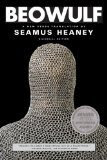
Right now I'm reading Beowulf (along with all of the other books I have on the go), and I'm really finding that the translation makes a big difference.

I have both the Seamus Heaney translation, which is the one which I believe is most often found in bookstores these days, and the Howell Chickering one. Both are facing page translations, and you wouldn't think there was too much of a difference between them, seeing as it's the same text.

However, there really is a difference. Seamus Heaney has tried, more or less, to hold to the alliteration of the original Beowulf, but has, as far as I can see, chosen to not reproduce some of the rest of the structure of the poem. There is also, in my opinion, a more casual feel to his translation. Most of the book is the poem, which is probably a plus for the causal reader. I know I liked it, being able to jump right into the poem, when I first got the book back in 2004.

Nowadays though, I prefer the style of the Chickering translation. He hasn't followed the alliteration scheme of the original, but the stress patterns seem to be there, as is the caesura of the lines. Also, more than half of the book is made up of the introduction and commentary about the poem. For me, this is a plus as he's included a pronunciation guide, poetic structure analysis (including examples) and other helpful information in the introduction. The pages of the poem include footnotes of emendations and disagreements over word corrections in the Old English as well.

I haven't made it as far as the commentary yet, being just over 1200 lines into the poem, but on a quick skim, I noted that it includes a detailed history of the manuscript history.

What I'd like to find for Beowulf is a translation that does what Tolkien did for the poem Sir Gawain And The Green Knight: His translation includes both the alliteration and the poem structure. Of the translations I've read, this has become my favorite (and not simply because it is one of the works of J.R.R. Tolkien this time).

So, what makes a good translation for you?

Saturday, July 11, 2009

By Heresies Distressed - David Weber

By Heresies Distressed
David Weber
Tor Books
Copyright Date: 2009
978-0765315038
The amazon.com description is:
Now the battle for the soul of the planet Safehold has begun.

The Kingdom of Charis and the Kingdom of Chisholm have joined together, pledged to stand against the tyranny of a corrupt Church. The youthful Queen Sharleyan of Chisholm has wed King Cayleb of Charis, forging a single dynasty, a single empire, dedicated to the defense of human freedom. Crowned Empress of that empire, Sharleyan has found in Cayleb’s arms the love she never dared hope for in a “marriage of state.” In Cayleb’s cause, his defiance of the ruthless Group of Four who govern mother Church, she has found the task to which she can commit her mind and her courage. It is a cause for which she was born.

Yet there are things Sharleyan still does not know. Secrets Cayleb has not been permitted to share, even with her. Secrets like the true story of humanity on Safehold. Like the intricate web of lies, deception, and fabricated “religion” which have chained humanity for almost a thousand years. Like the existence of the genocidal alien Gbaba, waiting to complete mankind’s destruction should humans ever attract their attention once more. Like the existence of a young woman, Nimue Alban, nine hundred years dead, whose heart, mind, and memories live on within the android body of the warrior-monk she knows as Merlin.

And so Empress Sharleyan faces the the great challenge of her life unaware of all that task truly entails...or of how the secrets the man who loves her cannot share may threaten all they have achieved between them...and her own life.


By Heresies Distressed is David Weber's latest book and the sequel to the books Off Armageddon Reef and By Schism Rent Asunder. It picks up almost directly where By Schism Rent Asunder left off and keeps going from there.

David Weber is well up to his ususal standards in writing interesting characters and exciting events. Even the "bad" characters are three dimensional and complex in their motivations. The way Weber writes, he hints at future events (most of the time) but doesn't give things away, so the reader is always wondering what's going to happen until it actually does.

I commented in my review of By Schism Rent Asunder that I'd forgotten some of the details from the first book, and I found that that had happened this time as well. I've really got to re-read the first two books in the series. At the same time, my note of the second book being a "middle" book also holds true here as well. There has to be at least one more book in the works, given that there are plenty of things the author has left unresolved, including what's going on within the Church itself.

In this book we find out about some other people who have been charting the abuses of the Church in secret, but although there are some rumors of what's going to happen, we're left wondering (along with the suggestion that something's going to happen soon). In other words, there's plenty to build anticipation for the next book when it comes out.

Some people have commented on other blogs that they don't especially like the names Weber is using in this series. Personally, I like it. After all, the colonists were from Earth originally, so the names are Earth names. At the same time, over the centuries, the languages have changed, resulting in what we see in the Safehold series. I'm finding it fun to try and pick out what the original name (and therefore the name that the characters probably think it is) was. Most of the time it is obvious, but sometimes it takes a bit of thought. It's a detail that I like, and I haven't seen too many authors using it.

This is a series that's turning out to be just as good as David Weber's best known series about Honor Harrington, although it's very different. I've seen a few comparisons with the Dahak series as well.

Overall, I really recommend this book and the whole series that it's a part of.

Friday, July 10, 2009

On Religion and Safehold Post Link

I'm nearly finished reading David Weber's latest book: By Heresies Distressed (Should be read tonight and I'll review it tonight or tomorrow if that's the case).

However, I found a link to a link to this post (confusing chain) in my blog reader: On Religion And Safehold. It's a guest post written by David Weber, and I've got to say it's a fascinating glimpse into the mind of a great author.

I must say in the mean time, I'm absolutely enjoying this book, and it's rapidly becoming a favorite. I'm definitely going to have to re-read the previous two books in the series as well: Off Armageddon Reef and By Schism Rent Asunder.

Wednesday, July 8, 2009

Book Rambling: Main Characters and Worlds to Visit

I finished reading Memoirs Of A Geisha a couple of days ago now, and ended up thinking abou the life Sayuri lived, which then transformed into musing on the lives of main characters in a lot of other books. This was also inspired by re-reading the thread If You Could Spend A Week In Fantasyland... on LibraryThing.

Take a book that you've loved, any book and here's the question: Would you want to
  • A: take the place of the main character, for however short a time?
  • B: live in/visit that world.
I started thinking about that last night, and aside from a few young adult novels and romances, I'd have to say the answer is no. However interesting the world, there's generally going to be some reason I wouldn't want to live in it (and generally, the more interesting a book is to read, the more that's the case).

Mercedes Lackey's books are a case in point. Aside from the Elemental Masters series, she tends towards unhappy main characters: Vanyel being the best example of them all. On the other hand, Valdemar doesn't seem to be too bad a place to live, but how about the rest of the world? Still, a number of the books in this series have been classified as Young Adult in the libraries. Either way, the Valdemar books are some of the ones I re-read the most often.

Laurell K. Hamilton's books? No thanks! It might be neat to see the worlds she's created for Anita and Merry, but to live in them? Too dangerous, I think, especially if you're anywhere near the main characters.

How about Twilight of Avalon by Anna Elliott? It's the middle of a war. This world might be great for a guy, but for a woman? IIRC, Isolde is basically sold off to the highest bidder for her husband after her first husband dies (and only days afterwards, at that).

One world I wouldn't mind is that of The Blue Sword, by Robin McKinley. It's an interesting world and cultures, and also, nothing too bad ever happens to the characters.

Tuesday, July 7, 2009

Memoirs Of A Geisha - Arthur Golden

Memoirs of A Geisha
Arthur Golden
Vintage Canada
Copyright Date: 1997
9780676971750

The amazon.com description is:
In this literary tour de force, novelist Arthur Golden enters a remote and shimmeringly exotic world. For the protagonist of this peerlessly observant first novel is Sayuri, one of Japan's most celebrated geisha, a woman who is both performer and courtesan, slave and goddess.

We follow Sayuri from her childhood in an impoverished fishing village, where in 1929, she is sold to a representative of a geisha house, who is drawn by the child's unusual blue-grey eyes. From there she is taken to Gion, the pleasure district of Kyoto. She is nine years old. In the years that follow, as she works to pay back the price of her purchase, Sayuri will be schooled in music and dance, learn to apply the geisha's elaborate makeup, wear elaborate kimono, and care for a coiffure so fragile that it requires a special pillow. She will also acquire a magnanimous tutor and a venomous rival. Surviving the intrigues of her trade and the upheavals of war, the resourceful Sayuri is a romantic heroine on the order of Jane Eyre and Scarlett O'Hara. And Memoirs of a Geisha is a triumphant work - suspenseful, and utterly persuasive.

Told from Sayuri's perspective as she looks back on a long life as a geisha, Arthur Golden has written an engaging, detailed book from which I found that I could see the scenes he described. His descriptions are vivid, and the characters real (if not always likable). He has even included the fiction of a translator's note at the beginning of the book, adding another layer of verisimilitude to the picture Memoirs of a Geisha forms of Japanese life.

This isn't my typical book reading choice, but I was looking for a change of pace from fantasy and ancient history. I'm glad I did get it. Were I inclined to rate books here, this would be a definite five star novel!

Although I found the first two chapters slow going, I quickly got into this book and found that I couldn't put it down, ending up reading until far to late at night for the last three nights. I had to know how Sayuri was going to deal with the characters around her: Pumpkin, Auntie, Mother and Hatsumomo, not to mention the various clients she had.

I know very little about Japanese culture so I have no idea of how accurate the book is and how much has been romanticized for fiction. Honestly, I'm still trying to figure out if Sayuri had a happy ending or not. She certainly had an eventful life, with the Second World War smack in the middle of it.

According to the author's note at the end of the book, Arthur Golden did quite a bit of research before and during the writing of Memoirs Of A Geisha, including a number of interviews with a geisha.

That's another thing Memoirs Of A Geisha did. It made me think of the Second World War from the Japanese perspective. I'm used to reading and thinking about the European portions of the War, but less so about the Japanese/Pacific aspect.

At times while I was reading, I got the impression of Sayuri's way of life being a dying one. As I said though, with no knowledge of Japanese culture, I have no idea if this impression is the correct one. It was certainly an interesting life she led, and by the end of the book, I rather got the feeling that had I gone to New York, and looked around, I would have seen her on the streets just as she described herself, even though the book is fiction. That's how real the author managed to make her.

I'm curious. I know that Memoirs Of A Geisha has been made into a movie, but I haven't seen it. How does it compare with the book?

Monday, July 6, 2009

Tuesday Thingers

I'm nearly finished Memoirs of A Geisha and taking a break from both the book and preserving fruit with this blog post.

Actually, it started life as a comment over at Wendi's Book Blog and took on a life of its' own. As a result, this is my first Tuesday Thingers post.

This week she's asking about social networking sites.

I guess I'm lukewarm at best on social networking. I use LibraryThing the most, although I have a couple of friends that really prefer GoodReads, and who have convinced me to sign up. Personally, although I have an account there, I don't really use it. As a result, I find LibraryThing to be the easier of the two to use. I love it. The site/groups has doubled my wishlist (usually in terms of history books, but it was LibraryThing that introduced me to the Naomi Novik Temeraire books).

I've never looked into Shelfari at all.

I'm getting into Twitter, but I haven't gotten into MySpace or Facebook, and to be honest, I'm not planning to. Twitter I started with the intention of using it mostly to post updates and links for both All Booked Up, which is this blog, and my J.R.R. Tolkien site: Finduilas's J.R.R. Tolkien Page. However, I've started using it to post more and more little updates about what I'm doing. It's strangely fascinating somehow.

If I had to stick with just one of the networking sites, it would probably be LibraryThing. The groups there have been such a help, including finding book titles for me that I'd completely forgotten.

Mailbox Monday - July 6

Mailbox Monday, hosted by Marcia of The Printed Page. is one of my favorite memes to read. It's interesting to see what books people are getting each week.

Anyway, my haul from last Monday to today is the following:

G. R. Grove's The Ash Spear. An E-book that I got through the LibraryThing Member Giveaway program. This is the first time I've managed to get a book through either the Early Giveaway or the Member Giveaway, so that's a landmark of sorts.

The Ash Spear is set in 6th century Wales, in the generation or so following King Arthur. It's the third book in the series, following on Storyteller and Flight of the Hawk. I haven't read either of the first two books. The Ash Spear does make numerous references to the events of the previous books, but I'm finding that I can guess as the events from the context in the current book. Regardless, I'm definitely enjoying it a lot.

The remaining books of the week I bought:

This one turned up actually in the mailbox while I was writing up this post (I ordered it a couple of weeks ago):
Making A Living In The Middle Ages by Christopher Dyer
It's an ex-library book, but aside from the stickers, you'd never know it. No yellowing, no broken spine and no creases. I think I got excellent value here. This is a book which a number of people have recommended as well, so I'm definitely glad to have gotten it.
The jacket blurb says:
In this masterly survey, Christopher Dyer reviews our thinking about the economy of Britain in hte middle ages. By analysing economic developments and change, he allows us to reconstruct, often vividly, the daily lives of people in the past. The period covered here saw dramatic alterations in the state of the economy; and this account begins with the forming of villages, towns, networks of exchange and the social hierarchy in the ninth and tenth centuries, and ends with the inflation and population explosion of the sixteenth century.

This is a book about ideas and attitudes as well as the material world, and Dyer shows how people regarded the economy and how they responded to economic change. We see the growth of towns, the clearance of woods and wastes, the Great Famine, the Black Death, and the upheavals of the fifteenth century through the eyes of those who lived through these great events.

Changes were not always planned or directed by the rich and powerful, but arose from the uncoordinated ambitions and actions of thousands of ordinary people. Making a living in a changing world presented peasants, artisans and wage workers, as well as barons and monks, with dilemmas and decisions. The lives of those individuals were also subject to impersonal forces, such as climate, but the author emphasizes the choices that were made.

This book will guide readers through the controversies of the impact of the Vikings and the Norman Conquest, the importance of population growth, the fourteenth-century crisis and urban decline. Dyer deals with issues in social history which had an impact on the economy, such as family structures, social control and social protest. He uses the evidence of archaeology and the landscape as well as the more conventional records. Clearly and robustly written, this book sets a new standard for the understanding of medieval life.


The rest of the books:
Memoirs of A Geisha by Arthur Golden
I'd never read this book before. However, now that I'm past the first two chapters, I'm finding that I can't put the book down. My guess is that I'll have it finished today or tomorrow.

The amazon.com description is:
In this literary tour de force, novelist Arthur Golden enters a remote and shimmeringly exotic world. For the protagonist of this peerlessly observant first novel is Sayuri, one of Japan's most celebrated geisha, a woman who is both performer and courtesan, slave and goddess.

We follow Sayuri from her childhood in an impoverished fishing village, where in 1929, she is sold to a representative of a geisha house, who is drawn by the child's unusual blue-grey eyes. From there she is taken to Gion, the pleasure district of Kyoto. She is nine years old. In the years that follow, as she works to pay back the price of her purchase, Sayuri will be schooled in music and dance, learn to apply the geisha's elaborate makeup, wear elaborate kimono, and care for a coiffure so fragile that it requires a special pillow. She will also acquire a magnanimous tutor and a venomous rival. Surviving the intrigues of her trade and the upheavals of war, the resourceful Sayuri is a romantic heroine on the order of Jane Eyre and Scarlett O'Hara. And Memoirs of a Geisha is a triumphant work - suspenseful, and utterly persuasive.
Charmed Destinies, an anthology of stories by Mercedes Lackey, Catherine Asaro and Rachel Lee.
This is not a new book, but a newly released edition of a book from 2003, something I hadn't realized until after I bought it.
The jacket description:
Three classic stories of timeless love and tantalizing fantasy…
Counting Crows by New York Times bestselling author Mercedes Lackey
In Lady Gwynnhwyfar's dark, lonely court, her only ally was noble Sir Atremus, a warrior willing to fight for her honor. But would her powerful spell capture his heart—or tumble the kingdom into chaos?
Drusilla's Dream by USA TODAY bestselling author Rachel Lee
Every night Drusilla Morgan dreamed of courageous and handsome Miles Kennedy. Their quest: to battle evil and find true love. Yet when the sun rose, would Drusilla's fantasy man become a reality?
Moonglow by Nebula Award–winning author Catherine Asaro
In a world where kings married for magic, Iris Larkspur was required to wed the prince—despite the spell that kept him deaf, mute and blind. Healing her bridegroom would take a power greater than any she'd ever known—one only two bonded hearts could provide!
The Lost Capital Of Byzantium by Steven Runciman
I've been to Mistra, the subject of this book, although it's been a few years. As a result, since it was somewhere I wish I'd had more time to explore, I had to have the book, so I could learn more about it. This, by the way, was not the sort of book I even remotely expected to find in my local bookstore.

The jacket description:
Clinging to a rugged hillside in the lush valley of Sparta lies Mistra, one of the most dramatically beautiful Byzantine cities in Greece, a place steeped in history, myth, and romance.

Following the Frankish conquest of the Peloponnese in the thirteenth century, William II of Villehardouin built a great castle on a hill near Sparta that later came to be known as Mistra. Ten years later, in a battle in northern Greece, Villehardouin was defeated and captured by the Byzantine emperor. The terms for his release included giving Mistra to the Byzantine Greeks. Under their rule, the city flourished and developed into a center of learning and the arts and was a focal point for the cultural development of Europe.

Sir Steven Runciman, one of the most distinguished historians of the Byzantine period, traveled to Mistra on numerous occasions and became enchanted with the place. Now published in paperback for the first time, Lost Capital of Byzantium tells the story of this once-great city—its rise and fall and its place in the history of the Peloponnese and the Byzantine empire.

Saturday, July 4, 2009

The Swan Maiden - Jules Watson

The Swan Maiden
Jules Watson
Bantam
Copyright Date: 2009
978-0553384642

According to the cover of The Swan Maiden:
In this lush, romantic retelling of one of the most enduring Irish legends, acclaimed Celtic historical author Jules Watson reignites the tale of Deirdre—the Irish Helen of Troy—in a story that is at once magical, beautiful, and tragic.

She was born with a blessing and a curse: that she would grow into a woman of extraordinary beauty—and bring ruin to the kingdom of Ulster and its ruler, the wily Conor. Ignoring the pleadings of his druid to expel the infant, King Conor secrets the girl child with a poor couple in his province, where no man can covet her. There, under the tutelage of a shamaness, Deirdre comes of age in nature and magic…. And in the season of her awakening, the king is inexorably drawn to her impossible beauty.

But for Deirdre, her fate as a man’s possession is worse than death. And soon the green-eyed girl, at home in waterfall and woods, finds herself at the side of three rebellious young warriors. Among them is the handsome Naisi. His heart charged with bitterness toward the aging king, and growing in love for the defiant girl, Naisi will lead Deirdre far from Ulster—and into a war of wits, swords, and spirit that will take a lifetime to wage.

Brimming with life and its lusts, here is a soaring tale of enchantment and eternal passions—and of a woman who became legend.

This is a book that I ended up buying because of what I'd read about it on various of the blogs I follow, although I can't now remember the specific blogs that reviewed it. I'm glad I did get it though.

A fascinating fantasy based on an old Irish legend, The Swan Maiden is definitely a good read. Because of the legendary base, you know the story has to follow a certain path to its conclusion, but at the same time I found that I had to keep reading to see how Jules Watson was going to reach that end.

I found the prophecy to be rather reminiscent of Greek myth: Oedipus, Paris etc, where something prophesied occurrs despite the actions taken to avoid it, as though it is the action of avoiding the prophecy that sets it in motion. That, however, seems to be fairly typical of these ancient stories. A warning perhaps?

The setting of the story is iron age Ireland, apparently a few centuries before Christ, but there are, so far as I can tell, not being an expert in Irish ancient history, no real markers to definitively pin a period down.

Jules Watson, the author has created a vivid and realistic (although magical) world which the reader can almost touch, hear and smell. That's one of the things I really liked about the book, the feeling that there was more to the world, and that there were other worlds touching on this one. Every life is interconnected and has it's place.

Aspects of this story reminded me of some of the other ancient-set stories I've enjoyed, such as Epona, written by Morgan Llwellan. Also, of parts of Marion Zimmer Bradley's The Mists of Avalon. I will definitely admit that I'm rather partial to the mix of history and fantasy to be found here in The Swan Maiden.

On the other hand, there were times when I found the story to be a bit slow moving and I found myself skimming for a few pages. Not enough to mar my enjoyment though.

Next year, there's going to be another myth-set book by Jules Watson, and I'm going to have to keep an eye out for it as well (not to mention the trilogy she's written, which I have yet to read): The Raven Queen. I get the feeling that it is intended as a sequel to this book.

One thing I wonder at, is given how The Swan Maiden is based on Irish legend, if anyone's read the original legend, how does it compare?

Thursday, July 2, 2009

Incubus Dreams - Laurell K. Hamilton

Incubus Dreams
Laurell K. Hamilton
Berkley Publishing Group
Copyright Date: 2004
0425098243

According to the cover of Incubus Dreams:
As consultant to the Regional Preternatural Crime Investigation Unit, Anita's called in on what appears to be a case involving a serial killer - a vampire serial killer, who may be preying on strippers.

She's sure that none of the local vamps are responsible - but her judgement may be clouded by a conflict of interest. For she is, after all, the consort of Jean-Claude, the ever-intoxicating Master Vampire of the City - something that both her human friends and her ex, the alpha werewolf Richard, are quick to point out.

Surrounded by suspicion, overwhelmed by her attempts to control the primal lusts that continue to wrack her as result of her passionate contacts with vampire, werewolf, and the shapeshifter Micah, Anita is pushed to her limits - and beyond...

Although I first bought and read Incubus Dreams when the book was first released, I hadn't re-read it since, so reading it this time was almost like reading the book for the first time again. I'd chosen to re-read this one now because of Vittorio, the criminal of the book, because of the role he plays in the latest of the Anita Blake: Vampire Hunter series, Skin Trade. When reading Skin Trade, I'd found that I couldn't remember a thing about his previous appearance.

However, I also found quite quickly, that compared to Skin Trade I could really understand the complaints I've seen in other reviews of the recent books in the series. The crime factor was almost pushed to the background in comparison to the metaphysics and sex, especially the sex. Add to that the loose end of the family that wanted their son raised...

On the other hand, Incubus Dreams sets up some of the situations in later books with Malcolm and his vampires, including The Harlequin, so the lack of resolution in that case is key.

I'm almost certain that the first chapters of the book though were used as a short story in another anthology, although I can't remember the title. I just know that I'd read them before, even when I first read the book.

Incubus Dreams is long - over six hundred pages, and there's plenty going on in the story, and plenty of changes in character interaction. This was the book in which the triumvirate between Anita, Damian and Nathaniel was set up, and quite a bit of the book is the three of them learning to balance out the effects that had. As a result we do see more of Nathaniel and the others. Jason was also absolutely perfect. I guess that stuck in my head because of his role in Blood Noir, another of the books I read recently.

Overall, I'd have to say this wasn't my favorite book in the series, but it was still a good read.

Wednesday, July 1, 2009

Brian's Hunt - Gary Paulsen

Brian's Hunt
Gary Paulsen
Laurel Leaf
Copyright Date: 2003
978-0553494150

According to the cover of Brian's Hunt:
Millions of readers of Hatchet, The River, Brian’s Winter, and Brian’s Return know that Brian Robeson is at home in the Canadian wilderness. He has stood up to the challenge of surviving alone in the woods. He prefers being on his own in the natural world to civilization.

When Brian finds a dog one night, a dog that is wounded and whimpering, he senses danger. The dog is badly hurt, and as Brian cares for it, he worries about his Cree friends who live north of his camp. His instincts tell him to head north, quickly. With his new companion at his side, and with a terrible, growing sense of unease, he sets out to learn what happened. He sets out on the hunt.

Although the shortest and last book in the series, being only a hundred and three pages, including the Author's Note, Brian's Hunt is perhaps the most exciting of them. On his journey to rejoin the Smallburrow family, Brian, now sixten, finds an injured dog. As he travels, he cares for the dog, bringing her back to full health. That's only the start of the adventure.

In both Brian's Hunt and Brian's Return, there is an author's note which makes for very interesting reading: Apparently Gary Paulsen based several of Brian's adventures on events in his own life.

That certainly explains how come the descriptions and scenery are so vividly described, as the author wasn't trying to imagine how something looked, but instead was describing something he'd seen or experienced.

Some of the reviews class this book as being for Grade Six to Ten or Six to Nine. I'd say it's good for all ages, with no upper limit. However, I'd definitely note a caution for younger readers, as there are a couple of scenes which are iffy.

As with all of the books in this series, Brian's Hunt was a quick read, and I couldn't put it down until I'd read the last page. From scenes of incredible peace and beauty, to a couple of scenes of the aftermath of violence, the book has it all, spanning the emotions.

Other books in the series:
Hatchet
The River
Brian's Hunt
Brian's Winter
Brian's Return

Tuesday, June 30, 2009

Books Read In June

Going from the most recent to the earliest, I reviewed a whopping twelve books this month. There's two other books that I read, but I haven't gotten the reviews written for: Brian's Hunt by Gary Paulsen and Incubus Dreams by Laurell K. Hamilton.

Brian's Return
Gary Paulsen
The fourth book about Brian Robeson. A very quick but enjoyable read where everything is described vividly and with passion.

An excerpt from my review:
In some ways this was the most beautiful of the books, filled with peaceful descriptions of nature and small details about the world. No great disasters such as plane crashes this time, but the story doesn't need them.

Brian's Winter
Gary Paulsen
This is the third book written about the adventures of Brian Robeson after the plane crash. However, this is a unique book as it takes the ending of Hatchet and goes "What If?"

An excerpt from my review:
Just reading about the weather in the Canadian wilderness in winter made me shiver. I've read about trees exploding, but Gary Paulsen's descriptions were so vivid I could almost see it happening, along with other incidents such as the skunk.

The River
Gary Paulsen
After surviving a plane crash and living off of his wits alone in the wilderness, Brian Robeson was rescued at the end of Hatchet. In The River he is asked to go back and do it again in order to teach others how to survive.

A snippet from my review:
I like the way the author has chosen to get into Brian's head, showing his thought processes, and how easy he found it to get back into the mindset he had during his first experience in the wilderness. This time though, he's also exploring (unintentionally) the effects of an extended period without sleep, which are very vividly described.

Hatchet
Gary Paulsen
The Newberry Honor winning survival story and the first of a series of five books about Brian Robeson and his life after he survived a plane crash in the wilderness.

A snippet from my review:
At just under two hundred pages, The Hatchet is quite the quick read I found, finishing it in only a couple of hours, but I also found that I couldn't put the book down until it was finished (when I picked up the next book, The River). This was all true even given the knowledge that Brian had to survive because there are more books about his experiences after the adventures of The Hatchet.

Space Cadet
Robert A. Heinlein
A classic science fiction novel that's stood the test of time, decades of time, and it's still just as exciting and fun to read.

A snippet from my review:
Where Heinlein excels in my mind is in the creation of his characters. They're all very 'real' in these books, with doubts, weak areas, problems, and yet confidence. When working in a group they can come together to overcome separate weaknesses as well. And yet, he's spare with the details and descriptions, making for a fairly short, fast-moving story which can be hard to put down (I ended up finishing the read far too late at night).
Bess Of Hardwick: First Lady Of Chatsworth
Mary S. Lovell
A biography of Elizabeth Shrewsbury (to use just one of her many names), one of the most powerful women in Tudor and Elizabethan times. Interesting, thought-provoking and full of fascinating glimpses into the life of the sixteenth century.

A snippet from my review:
Overall, if you're interested in the Tudor and Elizabethan periods of English history, I highly recommend this book. Not dry in the slightest, and highly readable, Bess of Hardwick also includes two sections of illustrations, photos and paintings, most of which are in full color.
The Tattooed Map
Barbara Hodgson
The first word that comes to mind about this book is "different". The book is lavishly decorated and illustrated, so that it resembles a true diary - sketches, notes, ticket stubs etc. If you kept a travel journal, I'd bet it looks something like this. I know mine did. On top of that, a story that captures you and won't let you go. Having read this book, I'd love to see the places Barbara Hodgson describes, such as Marrakesh.

A snippet from my review:
The Tattooed Map is a moderately quick read, and, in my opinion, one that doesn't disappoint....By the time I'd finished the story, I still knew next to nothing about the characters, but it didn't matter. I was enthralled by their adventures, and I'd still like to know more.
Skin Trade
Laurell K. Hamilton
The most recent of the Anita Blake, Vampire Hunter series, Skin Trade picks up where Blood Noir left off. It also is my new favorite of the newest books in the series.

A snippet from my review:
My first reaction on finishing Skin Trade, the latest book in Laurell K. Hamilton's Anita Blake: Vampire Hunter series was WOW!. Admittedly, this was at somewhere around two this morning. Which should say something. For the last three/four days, this book has kept me up far past my bedtime, because I just had to know what happened next.
Greek Fire, Poison Arrows And Scorpion Bombs
Adrienne Mayor
Focusing on ancient uses of chemical and biological weapons, this is a book which will change your view on Classical and early Medieval attitudes. You don't think they used these horrific weapons? Neither did I. Adrienne Mayor looks at myth, history and archaeology to form this book. Well written and interesting.

A snippet from my review:
We think of weapons of mass destruction, be they chemical or biological as being relatively new things in the scope of history. However, as proved by Adrienne Mayor, clearly they were not. Poisons, fires and disease have been around for thousands of years. Of course people were going to figure out ways to use them for their own purposes.
Blood Noir
Laurell K. Hamilton
The sequel to The Harlequin, and closely followed by Skin Trade, this is one of the books in Hamilton's best-selling Anita Blake: Vampire Hunter series. Not my favorite of the series, but once I got into it, the book was good and left me wanting more. Thankfully I read it just before Skin Trade came out.

A snippet from my review:
This book is shorter than some of Hamilton's books, but the pacing was fast, so the story didn't seem to suffer any. I will definitely agree with some of the reviews I've read that there is a bit too much sex, but that's been the case in all of the books since Narcissus In Chains. It's just become part of the book style now for me.
The Millionaire Next Door
Thomas J. Stanley, Ph.D. and William D. Danko, Ph.D.
A highly rated and bestselling book on personal finance.

A snippet from my review:
Frankly, I found the book a bit disappointing. First of all, and I should have realized it from the start, the book is entirely focused around the United States. I'm Canadian, so a lot of what the authors are mentioning doesn't apply quite the same. Second, the book only has one small line for any strategy other than the one the authors are following in The Millionaire Next Door.

Sigurd And Gudrún
J.R.R. Tolkien

The most recent of Christopher Tolkien's releases of J.R.R. Tolkien's many unpublished works. As far as I'm aware, this is also the most different of the books published for general consumption, being in the form of Norse poetry.

A snippet from my review:
Honestly, I liked this book, and I'm now planning to read more of the Norse sagas, as I came to Sigurd And Gudrun with no background knowledge on the subject at all. Although, in the commentary to this book, Christopher Tolkien has done a very good job of explaining the characters and the references that assume reader knowledge in the poetry, so the background knowledge isn't exactly needed.

Books bought in June

Now that I've started participating in Mailbox Mondays this list is redundant, so this will be the last "Books Bought In..." list.

In more or less reverse order, the books are:
  1. Barbara Hanawalt's Growing Up In Medieval London: The Experience Of Childhood In History
  2. Anne Bishop's The Shadow Queen
  3. J.R.R. Tolkien's Tales From The Perilous Realm
  4. Jo Graham's The Hand Of Isis
  5. Jules Watson's The Swan Maiden
  6. Jamie's Food Revolution by Jamie Oliver
  7. The Tattooed Map by Barbara Hodgson
  8. Windflower by Nick Bantock
  9. Skin Trade by Laurell K. Hamilton
  10. Greek Fire, Poison Arrows and Scorpion Bombs by Adrienne Mayor
  11. The Millionaire Next Door by Thomas J. Stanley and William D. Danko

Monday, June 29, 2009

Mailbox Monday - June 29th

After buying no books for last week, this week is a bumper five books.

The first one that came this week is Barbara Hanawalt's book Growing Up In Medieval London: The Experience Of Childhood In History. I ordered it the previous week and it arrived about last Wed. Barbara Hanawalt is an author that a couple of my teachers last year recommended to me, and I finally got around to getting one of her books. I've also got The Ties That Bound on order.

The jacket blurb says:

Bringing together a wealth of evidence drawn from court records, literary sources, and books of advice, Barbara Hanawalt weaves a rich tapestry of the lives of the common children of medieval London during the fourteenth and fifteenth centuries. Much of what she finds is eye opening. She shows for example that contrary to the belief of some historians medieval adults recognized and paid close attention to the various stages of childhood and adolescence. For instance, wardship cases reveal that London laws granted orphans greater protection than do our own contemporary courts. And with her innovative narrative style, Hanawalt brings medieval childhood to life, creating composite profiles based on the experiences of real children, such as Alison the Bastard Heiress, whose guardians married her off to their apprentice in order to gain control of her inheritance.Ranging from birth and baptism to apprenticeship and adulthood, here is a myth-shattering, innovative work that illuminates the nature of childhood in the Middle Ages.

You'd think that after I got my degree, I'd be able to stop buying history books, but that's turning out to not be true at all.

The remaining four books are fiction:

The Shadow Queen by Anne Bishop. I read and reviewed this book when it first came out at the beginning of March and I absolutely loved it. Even though I don't have to re-read it again any time soon, I probably will.

The jacket blurb:
From the national bestselling authora the new novel set in the "darkly fascinating world"("SF Site") of the Black Jewels.
Dena Nehele is a land decimated by its past. Once it was ruled by corrupt Queens who were wiped out when the land was cleansed of tainted Blood. Now, only one hundred Warlord Princes standawithout a leader and without hope.
Theran Grayhaven is the last of his line, desperate to find the key that reveals a treasure great enough to restore Dena Nehele. But first he needs to find a Queen who remembers the Bloodas code of honor and lives by the Old Ways. The woman chosen to rule Dena Nehele, Lady Cassidy, is not beautiful and believes she is not strong. But she may be the only one able to convince bitter men to serve once again.
J.R.R. Tolkien's Tales From The Perilous Realm (Hardcover). To be honest, I have all the stories in this volume (some of them in more than one edition, but to me, Alan Lee's illustrations make the book worth it. All of the illustrations in this book are black and white sketches, but wonderfully detailed for all that. Of the many great illustrators of Tolkien's Middle-Earth, Alan Lee is by far my favorite.

Tales From The Perilous Realm is made up of Roverandom, Farmer Giles Of Ham, The Adventures of Tom Bombadil, Smith Of Wootton Major, Leaf By Niggle and even the essay On Fairy-stories. All of it is introduced by Tom Shippey, the author of The Road To Middle-Earth and J.R.R Tolkien: Author Of The Century.

I doubt I'm going to be reading any time soon though, with the other books on my plate right now. These days I seem to be more collecting books on or by Tolkien than actually reading them.

Hand of Isis by Jo Graham. I've never read anything by Jo Graham before, but the premise looked interesting (and there was a buy three books, get the fourth free sale going on).

The jacket blurb actually says very little about the story:
Set in ancient Egypt, Hand of Isis is the story of Chariman, a handmaiden, and her two sisters. It is a novel of lovers who transcend death, of gods who meddle in mortal affairs, and of women who guide empires.

The final book I bought this past week was The Swan Maiden by Jules Watson. I don't know if I would normally have bought it just based on the jacket blurb, but there was quite a bit of discussion (all of it positive) of the book on a number of the blogs I follow a couple of months ago. Based on that, I went for it.

The jacket blurb:
In this lush, romantic retelling of one of the most enduring Irish legends, acclaimed Celtic historical author Jules Watson reignites the tale of Deirdre—the Irish Helen of Troy—in a story that is at once magical, beautiful, and tragic.

She was born with a blessing and a curse: that she would grow into a woman of extraordinary beauty—and bring ruin to the kingdom of Ulster and its ruler, the wily Conor. Ignoring the pleadings of his druid to expel the infant, King Conor secrets the girl child with a poor couple in his province, where no man can covet her. There, under the tutelage of a shamaness, Deirdre comes of age in nature and magic…. And in the season of her awakening, the king is inexorably drawn to her impossible beauty.

But for Deirdre, her fate as a man’s possession is worse than death. And soon the green-eyed girl, at home in waterfall and woods, finds herself at the side of three rebellious young warriors. Among them is the handsome Naisi. His heart charged with bitterness toward the aging king, and growing in love for the defiant girl, Naisi will lead Deirdre far from Ulster—and into a war of wits, swords, and spirit that will take a lifetime to wage.

Brimming with life and its lusts, here is a soaring tale of enchantment and eternal passions—and of a woman who became legend.

LinkWithin

Related Posts Plugin for WordPress, Blogger...