Showing posts with label G. R. Grove. Show all posts

Saturday, August 1, 2009

Books Read In July

The round-up of the books I read and reviewed over the month of July. Plenty of fiction of all sorts here this month, and I actually got one of the books for my Pre-Printing Press Challenge read.

In reverse order, from the most recent review:

Beowulf - Howell D. Chickering
A snippet from my review:
There's a majesty and dignity to Beowulf that makes it an amazing read, and even the modern English cries to be read out loud. I did find though, that after Beowulf's return from killing Grendel's mother, I lost the thread of the poem and really had a hard time picking it up again...
...This is probably a very good edition for any student of Old English and of the history of the fifth to eleventh centuries in Europe. It's definitely worth the read, and not just because of the place that the poem holds as one of the earliest poems in the English language.
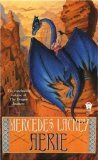

Aerie - Mercedes Lackey
A quote from my review:
The final book in Mercedes Lackey's Dragon Jouster series, Aerie made a satisfying conclusion. It was a quick read, with some very interesting twists, including to things we already thought we knew, such as the relationship being set up between Kiron and Aket-ten. Is that relationship as much a foregone conclusion as we thought?...

...Unlike the previous two books, where I wasn't certain if I'd read them when they first came out, I'm absolutely positive I hadn't read Aerie before. Like the other books in the series, Joust, Alta and Sanctuary it's a book suited for everyone from teens to adults of any age. There's nothing too graphic in it either, and some thought provoking ideas as well.


Sanctuary - Mercedes Lackey
A quote from my review:
...Either way, it was a very good read, although I did find it somewhat typical of Mercedes Lackey's young adult suited stories. I think I've noted it before, but the Dragon Jousters books are a set that would be quite well suited for either teens looking for more fantasy and for adults of any age who love dragons and fantasy novels. If you're a fan of Mercedes Lackey and you haven't read these books, you should give them a try. They're not exactly high literature, but they are (as are all of her books) a fun, although quick, read.


Alta - Mercedes Lackey
A quote from my review:
These books: Joust, Alta, Sanctuary and Aerie are perfectly safe for teens as well as adults, reminding me of the Owl trilogy (Darian) and the Heralds of Valdemar set (Talia), which are also by Mercedes Lackey, in terms of writing style. Also, the ages of the characters are similar to those of many teen books, although it's not explicitly stated anywhere.

Although part of a series, I found that Alta came to a satisfying conclusion of its own. None of this "middle book" stuff where either nothing happens, or the conclusion is left for the final book. Alta almost stands on its own, although there is plenty left for the following books to explore.


Joust - Mercedes Lackey:
A snippet (or two) from my review:
Joust is the first book in the Dragon Jousters series written by Mercedes Lackey, and it takes us back to the slightly young adult nature of some of her earlier books. I'd feel quite comfortable recommending this series to someone venturing out of the teen books into the adult ones, if they liked fantasy novels.

Anyway, Lackey has done something a bit different with this series: She's used ancient Egypt as her model for the lands, religion and civilization of Alta, but especially of Tia. It makes the books both familiar and alien at the same time, I found, as I recognized the source, but I'm not overly familiar with it.


The Serrano Connection - Elizabeth Moon
A snippet from my review:
It's really neat the way she mixes high and low technologies, such as horseback riding and space-flight, and it's all done in such a way that it fits together. The one doesn't seem out of place in the world of the other at all.

Honestly, I think that if you liked the Vatta's War series, also by Elizabeth Moon, I really think you'll like these two books. Now, I am trying to hunt down the next books in the series so I don't have to wait until September to continue reading. Hopefully the library will have them (or be able to interlibrary loan them to me) along with Trading in Danger, the first of the Vatta's War books.


The Hand of Isis - Jo Graham
This was honestly, my favorite book of the month.
A quote from my review:
We all know the story of Cleopatra, at leas the basics, how she was the lover of Caesar, and then of Mark Antony, and how she committed suicide after he was defeated by Octavian. Given that, we know more or less how the story is going to end. By half way through Hand of Isis I was wishing that somehow the characters would find a way to change what we know from history in order to have a happy ending, even though I knew it wouldn't happen.

Jo Graham wrote characters that just came alive right off the page, from Cleopatra to Dion, their friend. There's no difference from the famous characters to the minor. They all got fleshed out and made real. Quirks, joys, disappointments, they're all there and all part of the characters' lives. Even the cities and temples I could see, hear and smell, even taste as I read.


The Ash Spear - G. R. Grove
A quote from my review:
G. R. Grove has set this series in the generation or so just after the time of King Arthur, and located it mostly in the Welsh and northern regions of the British Isles. However, from there the story is quite different from most of the Arthurian period stories I've read, which made for a refreshing change: Gwernin, who is both the main character and the viewpoint character is no warrior or leader, but instead is an apprentice bard with a healthy appreciation for the mystical (not to mention the practical).

Also, there is much more of a pagan presence throughout The Ash Spear than I've seen in some of the other stories of the period. However, it works, and I think, that fact is probably fairly historically accurate too, although I'm no expert on the period. Again, it is a refreshing change.


By Heresies Distressed - David Weber
A snippet from my review:
David Weber is well up to his ususal standards in writing interesting characters and exciting events. Even the "bad" characters are three dimensional and complex in their motivations. The way Weber writes, he hints at future events (most of the time) but doesn't give things away, so the reader is always wondering what's going to happen until it actually does...

...This is a series that's turning out to be just as good as David Weber's best known series about Honor Harrington, although it's very different. I've seen a few comparisons with the Dahak series as well.


Memoirs Of A Geisha - Arthur Golden
A quote from my review:
Told from Sayuri's perspective as she looks back on a long life as a geisha, Arthur Golden has written an engaging, detailed book from which I found that I could see the scenes he described. His descriptions are vivid, and the characters real (if not always likable). He has even included the fiction of a translator's note at the beginning of the book, adding another layer of verisimilitude to the picture Memoirs of a Geisha forms of Japanese life.

This isn't my typical book reading choice, but I was looking for a change of pace from fantasy and ancient history. I'm glad I did get it. Were I inclined to rate books here, this would be a definite five star novel!


The Swan Maiden - Jules Watson
A snippet from my review:
Jules Watson, the author has created a vivid and realistic (although magical) world which the reader can almost touch, hear and smell. That's one of the things I really liked about the book, the feeling that there was more to the world, and that there were other worlds touching on this one. Every life is interconnected and has it's place...

On the other hand, there were times when I found the story to be a bit slow moving and I found myself skimming for a few pages. Not enough to mar my enjoyment though.


Incubus Dreams - Laurell K. Hamilton
A snippet from my review:
...I also found quite quickly, that compared to Skin Trade I could really understand the complaints I've seen in other reviews of the recent books in the series. The crime factor was almost pushed to the background in comparison to the metaphysics and sex, especially the sex. Add to that the loose end of the family that wanted their son raised...

On the other hand, Incubus Dreams sets up some of the situations in later books with Malcolm and his vampires, including The Harlequin, so the lack of resolution in that case is key.

Monday, July 13, 2009

The Ash Spear - G. R. Grove

The Ash Spear
G. R. Grove
lulu.com
Copyright Date: 2009
978-0-557-06070-2
The amazon.com description is:
"Elidyr Mwynfawr, King of Aeron, was a weak, greedy fool, and like many another such fool, he died of his folly. But because he was a King, in his dying he cost many better men their lives as well, and this was the way of it: for I, Gwernin Kyuarwyd, was there, and saw much of it myself, and the tale that I tell you is true

The Ash Spear is the third book in the series, which starts with Storyteller and is followed by Flight of the Hawk. As such, the reader is thrown right into the action, with little introduction to the characters or the world. I haven't read either of the two previous books and didn't find this to be too much of a problem. The story stands alone, more or less, although there were plenty of references to past actions and events. Despite that, I really have to find the first two books and read them eventually.

G. R. Grove has set this series in the generation or so just after the time of King Arthur, and located it mostly in the Welsh and northern regions of the British Isles. However, from there the story is quite different from most of the Arthurian period stories I've read, which made for a refreshing change: Gwernin, who is both the main character and the viewpoint character is no warrior or leader, but instead is an apprentice bard with a healthy appreciation for the mystical (not to mention the practical).

Also, there is much more of a pagan presence throughout The Ash Spear than I've seen in some of the other stories of the period. However, it works, and I think, that fact is probably fairly historically accurate too, although I'm no expert on the period. Again, it is a refreshing change.

Oftentimes, the names in the story are a bit of a mouthful, and I don't think that a pronunciation guide/glossary for some of the terms used throughout the story would have gone amiss, but it's quite possible to get the gist of them from the context. Perhaps they were explained more fully in the earlier volumes?

At the same time, I found the language and phrasing used helped to set the stage for the period. Sometimes it's more archaic words, other times it's a phrasing where the words are somewhat out of order to the modern ear. G. R. Grove has also included several long selections of poetry, which makes sense, given that the main character is training to be a bard. There's even a section from Beowulf included later on in the book, although it's more scattered lines than an actual excerpt.

Gwernin (as the entire story is set from his viewpoint as he reminisces) is very descriptive about events and scenery during his reminiscing of the story, which all helps to set the stage. It's the details he remembered and added that really allowed me to be able to almost visualise the events and the scenery.

The one thing I found slightly annoying through the story was the repeated formula of "But that, O my children, is a story for another day." It's used to close off just about every chapter in the book, and I think also in other places as well. It's a minor point overall though.

Had I not received this book from the author through LibraryThing's Member Giveaway, I don't know that I would ever have heard about it. I'm really glad I did though.

As I said earlier, I really have to recommend this book, and I'm going to go hunting for the first two in the series.

Monday, July 6, 2009

Mailbox Monday - July 6

Mailbox Monday, hosted by Marcia of The Printed Page. is one of my favorite memes to read. It's interesting to see what books people are getting each week.

Anyway, my haul from last Monday to today is the following:

G. R. Grove's The Ash Spear. An E-book that I got through the LibraryThing Member Giveaway program. This is the first time I've managed to get a book through either the Early Giveaway or the Member Giveaway, so that's a landmark of sorts.

The Ash Spear is set in 6th century Wales, in the generation or so following King Arthur. It's the third book in the series, following on Storyteller and Flight of the Hawk. I haven't read either of the first two books. The Ash Spear does make numerous references to the events of the previous books, but I'm finding that I can guess as the events from the context in the current book. Regardless, I'm definitely enjoying it a lot.

The remaining books of the week I bought:

This one turned up actually in the mailbox while I was writing up this post (I ordered it a couple of weeks ago):
Making A Living In The Middle Ages by Christopher Dyer
It's an ex-library book, but aside from the stickers, you'd never know it. No yellowing, no broken spine and no creases. I think I got excellent value here. This is a book which a number of people have recommended as well, so I'm definitely glad to have gotten it.
The jacket blurb says:
In this masterly survey, Christopher Dyer reviews our thinking about the economy of Britain in hte middle ages. By analysing economic developments and change, he allows us to reconstruct, often vividly, the daily lives of people in the past. The period covered here saw dramatic alterations in the state of the economy; and this account begins with the forming of villages, towns, networks of exchange and the social hierarchy in the ninth and tenth centuries, and ends with the inflation and population explosion of the sixteenth century.

This is a book about ideas and attitudes as well as the material world, and Dyer shows how people regarded the economy and how they responded to economic change. We see the growth of towns, the clearance of woods and wastes, the Great Famine, the Black Death, and the upheavals of the fifteenth century through the eyes of those who lived through these great events.

Changes were not always planned or directed by the rich and powerful, but arose from the uncoordinated ambitions and actions of thousands of ordinary people. Making a living in a changing world presented peasants, artisans and wage workers, as well as barons and monks, with dilemmas and decisions. The lives of those individuals were also subject to impersonal forces, such as climate, but the author emphasizes the choices that were made.

This book will guide readers through the controversies of the impact of the Vikings and the Norman Conquest, the importance of population growth, the fourteenth-century crisis and urban decline. Dyer deals with issues in social history which had an impact on the economy, such as family structures, social control and social protest. He uses the evidence of archaeology and the landscape as well as the more conventional records. Clearly and robustly written, this book sets a new standard for the understanding of medieval life.


The rest of the books:
Memoirs of A Geisha by Arthur Golden
I'd never read this book before. However, now that I'm past the first two chapters, I'm finding that I can't put the book down. My guess is that I'll have it finished today or tomorrow.

The amazon.com description is:
In this literary tour de force, novelist Arthur Golden enters a remote and shimmeringly exotic world. For the protagonist of this peerlessly observant first novel is Sayuri, one of Japan's most celebrated geisha, a woman who is both performer and courtesan, slave and goddess.

We follow Sayuri from her childhood in an impoverished fishing village, where in 1929, she is sold to a representative of a geisha house, who is drawn by the child's unusual blue-grey eyes. From there she is taken to Gion, the pleasure district of Kyoto. She is nine years old. In the years that follow, as she works to pay back the price of her purchase, Sayuri will be schooled in music and dance, learn to apply the geisha's elaborate makeup, wear elaborate kimono, and care for a coiffure so fragile that it requires a special pillow. She will also acquire a magnanimous tutor and a venomous rival. Surviving the intrigues of her trade and the upheavals of war, the resourceful Sayuri is a romantic heroine on the order of Jane Eyre and Scarlett O'Hara. And Memoirs of a Geisha is a triumphant work - suspenseful, and utterly persuasive.
Charmed Destinies, an anthology of stories by Mercedes Lackey, Catherine Asaro and Rachel Lee.
This is not a new book, but a newly released edition of a book from 2003, something I hadn't realized until after I bought it.
The jacket description:
Three classic stories of timeless love and tantalizing fantasy…
Counting Crows by New York Times bestselling author Mercedes Lackey
In Lady Gwynnhwyfar's dark, lonely court, her only ally was noble Sir Atremus, a warrior willing to fight for her honor. But would her powerful spell capture his heart—or tumble the kingdom into chaos?
Drusilla's Dream by USA TODAY bestselling author Rachel Lee
Every night Drusilla Morgan dreamed of courageous and handsome Miles Kennedy. Their quest: to battle evil and find true love. Yet when the sun rose, would Drusilla's fantasy man become a reality?
Moonglow by Nebula Award–winning author Catherine Asaro
In a world where kings married for magic, Iris Larkspur was required to wed the prince—despite the spell that kept him deaf, mute and blind. Healing her bridegroom would take a power greater than any she'd ever known—one only two bonded hearts could provide!
The Lost Capital Of Byzantium by Steven Runciman
I've been to Mistra, the subject of this book, although it's been a few years. As a result, since it was somewhere I wish I'd had more time to explore, I had to have the book, so I could learn more about it. This, by the way, was not the sort of book I even remotely expected to find in my local bookstore.

The jacket description:
Clinging to a rugged hillside in the lush valley of Sparta lies Mistra, one of the most dramatically beautiful Byzantine cities in Greece, a place steeped in history, myth, and romance.

Following the Frankish conquest of the Peloponnese in the thirteenth century, William II of Villehardouin built a great castle on a hill near Sparta that later came to be known as Mistra. Ten years later, in a battle in northern Greece, Villehardouin was defeated and captured by the Byzantine emperor. The terms for his release included giving Mistra to the Byzantine Greeks. Under their rule, the city flourished and developed into a center of learning and the arts and was a focal point for the cultural development of Europe.

Sir Steven Runciman, one of the most distinguished historians of the Byzantine period, traveled to Mistra on numerous occasions and became enchanted with the place. Now published in paperback for the first time, Lost Capital of Byzantium tells the story of this once-great city—its rise and fall and its place in the history of the Peloponnese and the Byzantine empire.

LinkWithin

Related Posts Plugin for WordPress, Blogger...