Showing posts with label poetry. Show all posts

Wednesday, August 3, 2016

Unread Books - Tolkien 2016

After the past several years of running a mixed Unread Books list on my blog, last year I broke it down into categories. I'm doing the same thing this year, albeit a bit later in the year. Maybe it'll make it easier to keep the lists updated - and to find the books once I've read them. The plan is to have a fiction list, a primary sources list, a Tolkien list and a non-fiction list. Who knows, breaking the list up might even make it less intimidating!

I'm a Tolkien collector - see the various Tolkien lists I have on my blog (here, here and here), but I've ended up buying the books faster than I can read them. There are unreviewed books on those lists that I have read, although they were read before I started All Booked Up.

 Unread Books 2016 - Tolkien List:

  1. Hobbitus Ille - J.R.R. Tolkien - Fiction
  2. The Annotated Hobbit - J.R.R. Tolkien - Fiction
  3. J.R.R. Tolkien: A Reader's Guide - Wayne G. Hammond and Christina Scull - Non Fiction
  4. The History Of The Hobbit: Mr. Baggins - John Rateliff - Non Fiction
  5. The History Of The Hobbit: Return To Bag-End - John Rateliff - Non Fiction
  6.  Tolkien: A Celebration - Joseph Pearce - Non Fiction
  7. The Battle For Middle-Earth - Bonnie Rutledge - Non Fiction
  8. The Ring Of Words - Jeremy H. Marshall - Non Fiction
  9. The Children of Hurin - J.R.R. Tolkien - Fiction
  10. On Faerie Stories - Ed. Verilyn Flieger - Non Fiction
  11. The Tolkien Legendarium - Ed. Carl Hostetter - Non Fiction
  12. Splintered Light: Logos And Language In Middle-Earth - Verilyn Flieger - Non Fiction
  13. Green Suns and Faerie - Verilyn Flieger - Non Fiction
  14. The Fall of Arthur - Ed. Christopher Tolkien - Poetry
  15. Beowulf - Ed. Christopher Tolkien - Fiction
  16. The Art of The Hobbit - Wayne G. Hammond and Christina Scull - Non Fiction
  17. Interrupted Music: The Making Of Middle-Earth - Verilyn Flieger - Non Fiction
  18. Master of Middle Earth - Paul Koch - Non Fiction
  19. A Look Behind The Lord of the Rings - Lin Carter - Non Fiction
  20. A Tolkien Compass - Jared Lobdel - Non Fiction
  21. J. R. R. Tolkien: Author of the Century - Tom Shippey - Non Fiction
  22. The Gospel According To Tolkien - Ralph Woods - Non Fiction
  23. There And Back Again: J.R.R. Tolkien And The Origins of The Hobbit - Mark Atherton - Non Fiction
  24. Tolkien: A Celebration - Joseph Pearce - Non Fiction 
  25. The Story of Kullervo - Ed. Christopher Tolkien
  26. The Art of the Lord of the Rings - Wayne G. Hammond and Christina Scull - Non Fiction 
  27. Tolkien - Raymond Edwards - Non Fiction
  28. Middle-Earth: Visions of a Modern Myth - Donato Giancola - Art 
  29. J.R.R. Tolkien: A Secret Vice - Tolkien on Invented Languages - Ed. Dimitra Fimi and Andrew Higgins

Monday, November 3, 2014

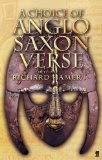
A Choice Of Anglo-Saxon Verse - Ed. Richard Hammer

A Choice of Anglo-Saxon Verse - Trans. Richard Hammer
A Choice of Anglo-Saxon Verse
Ed. Richard Hammer
Faber and Faber Limited
Copyright: 1970
978-0571228362

The amazon.com product description:
 This new edition contains the Old English texts of all the major short poems, such as "The Battle of Maldon", "The Dream of the Rood", "The Wanderer" and "The Seafarer", as well as a generous representation of the many important fragments, riddles and gnomic verses that survive from the 7th to the 12th centuries, with facing-page verse translations. These poems are the wellspring of the English poetic tradition, and this anthology provides a unique window into the mind and culture of the Anglo-Saxons.
I bought this a number of years ago, just after I finished taking an introductory Old English course at university, but only just got around to reading it over the last month and a bit. Of course, after the number of years it's been, I've completely forgotten everything about Old English that I learned at the time.

That said, this is a facing page translation edition, so you don't need to know any Old English to read it. Even without that knowledge it's interesting reading.

Each poem has a short introduction where the editor/translator talks a little about the poem, scholarship, translation issues etc, giving some context for the reader. There's also a short bibliography for each poem as well - usually one to three items.

I do have one minor quibble that I hadn't realized about until I started reading A Choice of Anglo Saxon Verse: this edition is actually from 1970, not the 2006 that Amazon gives. That surprised me, and leaves me wondering if scholarly opinions and translations have changed any over the last 40 or so years.

A Choice Of Anglo-Saxon Verse was read for two separate challenges: my own Pre-Printing Press Challenge and for the Mount TBR Challenge.

Tuesday, September 23, 2014

Catullus: The Complete Poems - Trans. Guy Lee

Catullus: The Complete Poems - Trans. Guy Lee
Catullus: The Complete Poems
Trans. Guy Lee
Oxford World's Classics
Copyright: 1990
978-0199537570

The amazon.com product description:
Of all Greek and Latin poets Catullus is perhaps the most accessible to the modern reader. Dealing candidly with the basic human emotions of love and hate, his virile, personal tone exerts a powerful appeal on all kinds of readers. The 116 poems collected in this new translation include the famous Lesbia poems and display the full range of Catullus's mastery of lyric meter, mythological themes, and epigrammatic invective and wit.

About the Series: For over 100 years Oxford World's Classics has made available the broadest spectrum of literature from around the globe. Each affordable volume reflects Oxford's commitment to scholarship, providing the most accurate text plus a wealth of other valuable features, including expert introductions by leading authorities, voluminous notes to clarify the text, up-to-date bibliographies for further study, and much more.
It's taken me a few months, but I've finally completed my read through of the complete poems of Catullus. This book counts for two different challenges: first, my own Pre-Printing-Press Challenge, and second, the Mount TBR Challenge. It's certainly been on my list for a few years now. This was one of my textbooks back in university, but we only had to read selected poems from the book.

Now, on to my review:
The Oxford World's Classics series has a very good reputation - at least three of my classes used their translations and editions for textbooks while I was at both college and university. I'd say that Guy Lee's translation of the poems of Catullus is no exception.

At least a third of the book is detailed notes on the poems - translation quirks and explanations, identities of the people mentioned in the poems - at least as much as we can guess at, poetry formats and many other little details.

If you're a student of Latin, there's another feature of this edition that makes it stand out: it's a facing page translation, one of only a few that I've seen other than the Loeb series. At the same time, the translations are flowing and fit the meter of the poetry as far as I can tell. To be honest though, my Latin is nowhere near good enough for me to be able to compare the translations of the poems with the originals. Still, I had fun picking over some of the poems to see how much I remembered. Both more and less than I though.

Catullus's poetry makes for interesting reading. The subject matter ranges from myths and legends to the small and everyday, from praising the people around him to cursing them with invective. It's definitely an interesting window onto the Roman world, though I'd have to say it's quite biased.

I'd also say this is a book to keep out of the reach of children - Some of the poems get fairly crude, and the sexual language is fairly frequent; adultery - definitely a common topic, incest, sexual relationships and insults are themes in quite a few of Catullus's works.

And yet, there's a lot of emotions visible in the poems as well: sadness, scorn, pride, love, anger, the book touches on the whole spectrum of the human experience.

I would definitely recommend this for any student of Latin or of Roman history.

Tuesday, April 29, 2014

Upcoming Tolkien Title - Beowulf

This is a book that I've heard rumors of for over a decade now: J.R.R. Tolkien's translation of Beowulf.
Beowulf - J.R.R. Tolkien
Beowulf
J.R.R. Tolkien
Release Date: May 22, 2014
978-0544442788

The amazon.com product description:
The translation of Beowulf by J.R.R. Tolkien was an early work, very distinctive in its mode, completed in 1926: he returned to it later to make hasty corrections, but seems never to have considered its publication. This edition is twofold, for there exists an illuminating commentary on the text of the poem by the translator himself, in the written form of a series of lectures given at Oxford in the 1930s; and from these lectures a substantial selection has been made, to form also a commentary on the translation in this book.

From his creative attention to detail in these lectures there arises a sense of the immediacy and clarity of his vision. It is as if he entered into the imagined past: standing beside Beowulf and his men shaking out their mail-shirts as they beached their ship on the coast of Denmark, listening to the rising anger of Beowulf at the taunting of Unferth, or looking up in amazement at Grendel’s terrible hand set under the roof of Heorot.

But the commentary in this book includes also much from those lectures in which, while always anchored in the text, he expressed his wider perceptions. He looks closely at the dragon that would slay Beowulf "snuffling in baffled rage and injured greed when he discovers the theft of the cup"; but he rebuts the notion that this is "a mere treasure story", "just another dragon tale". He turns to the lines that tell of the burying of the golden things long ago, and observes that it is "the feeling for the treasure itself, this sad history" that raises it to another level. "The whole thing is sombre, tragic, sinister, curiously real. The ‘treasure’ is not just some lucky wealth that will enable the finder to have a good time, or marry the princess. It is laden with history, leading back into the dark heathen ages beyond the memory of song, but not beyond the reach of imagination."

Sellic spell, a "marvellous tale", is a story written by Tolkien suggesting what might have been the form and style of an Old English folk-tale of Beowulf, in which there was no association with the "historical legends" of the Northern kingdoms.
I own and have read other translations of Beowulf, including the Chickering edition, but even so, I've been looking forward to this one for a while. J.R.R. Tolkien was a known expert on the subject and I'd really like to find out what he had to say.

Definitely, I'm looking forward to getting my hands on this one. May 22 can't come soon enough for me.

Friday, August 30, 2013

RIP Seamus Heaney

I just read about the death of Seamus Heaney, the Irish poet. I knew his name best from the translation of Beowulf he did some years ago, but he's done quite a few other volumes of original poetry as well, and I really want to find and read at least one of those in the near future.

To be honest, it was the samples of his poetry in the New York Times obituary that have inspired me to find and read more of his work. Eventually, I want to re-read his translation of Beowulf too, as it's been so long since I read it. That, though, is going to have to wait for a while.


Wednesday, May 1, 2013

Upcoming Tolkien Book - Fall of Arthur

There's a new Tolkien book coming out at the end of this month:

The Fall of Arthur
J.R.R. Tolkien
Ed. Christopher Tolkien
Houghton Mifflin Harcourt
Release Date: May 23, 2013
978-0544115897

The amazon.com product description:
The Fall of Arthur, the only venture by J.R.R. Tolkien into the legends of Arthur King of Britain, may well be regarded as his finest and most skillful achievement in the use of the Old English alliterative metre, in which he brought to his transforming perceptions of the old narratives a pervasive sense of the grave and fateful nature of all that is told: of Arthur’s expedition overseas into distant heathen lands, of Guinevere’s flight from Camelot, of the great sea-battle on Arthur’s return to Britain, in the portrait of the traitor Mordred, in the tormented doubts of Lancelot in his French castle.

Unhappily, The Fall of Arthur was one of several long narrative poems that he abandoned in that period. In this case he evidently began it in the earlier nineteen-thirties, and it was sufficiently advanced for him to send it to a very perceptive friend who read it with great enthusiasm at the end of 1934 and urgently pressed him ‘You simply must finish it!’ But in vain: he abandoned it, at some date unknown, though there is some evidence that it may have been in 1937, the year of the publication of The Hobbit and the first stirrings of The Lord of the Rings. Years later, in a letter of 1955, he said that ‘he hoped to finish a long poem on The Fall of Arthur’; but that day never came.

Associated with the text of the poem, however, are many manuscript pages: a great quantity of drafting and experimentation in verse, in which the strange evolution of the poem’s structure is revealed, together with narrative synopses and very significant if tantalising notes. In these latter can be discerned clear if mysterious associations of the Arthurian conclusion with The Silmarillion, and the bitter ending of the love of Lancelot and Guinevere, which was never written.
I'm definitely looking forward to buying and reading this one when it comes out for several reasons:
  1. It's Tolkien, and for me that's enough of a reason right there.
  2. Adding to my Tolkien collection.
  3. King Arthur is one of those topics that has intrigued me ever since I read Marion Zimmer Bradley's The Mists of Avalon years ago.
I know that Christopher Tolkien will do as good a job with this one as he has with everything else of his father's that he's edited. I'm hoping for an experience similar to that of reading Sigurd and Gudrun - which taught me more about poetry, rhythm and meter than did any of my English classes at university.

Thursday, April 15, 2010

The Aeneid - Virgil

The Aeneid
Virgil
Trans. Robert Fitzgerald
Vintage
Copyright: 1990
978-0679729525

The amazon.com product description:
Virgil's great epic transforms the Homeric tradition into a triumphal statement of the Roman civilizing mission. Translated by Robert Fitzgerald.
Okay, I've seen some non-descriptive descriptions before, but this one's pretty near the top. Still, I guess it does sum things up fairly neatly.

Although The Aeneid is written in the Homeric style, it dates from much later - the time of Augustus. The poem is also unfinished, or so the postscript says, because Virgil died. This is one of the most famous of the Roman poems too.

The Aeneid deals with the story of Aeneas' travels from the conquered city of Troy after the Trojan War as told in The Illiad and The Odessey, when he journeyed to Italy to found a new city on the commands of Venus. As to this particular translation? I can't say anything about the translation from my own experience, not having enough latin to even attempt the original. But, the Fitzgerald translation was the one we had in class at college. Also, there's a review from Bernard Knox on the back cover, who's written the introduction to the Fagles translation of The Aeneid IIRC. I can definitely say that this is a very readable book.

On the other hand, I felt like I needed a detailed map of the Mediterranean with all the old names in order to follow the route that Aeneas takes. That's one thing that this book lacks: a good map. I would have said also that I needed a glossary to the names, but I discovered that hiding at the very end of the book after I finished the read last night. Otherwise, I'd likely have found myself resorting to hoping the Oxford Classical Dictionary had them. I'm still thinking of doing that anyway.

Reading this with my notes (such as they were) from class was definitely interesting. They reminded me of the use of simile and elaborate naming conventions which are rife throughout the poem. There's also the traditional invocation of the Muses, both at the beginning of The Aeneid and then again several times throughout.

This poem drops names left, right and center. Especially during the battle scenes of the final two or three books. I kept going "who's that?" and "which side is he on again?". Because of that, I felt that they went on too long and I found myself skimming. Admittedly, that's because I was completely lost.

There are also quite a few references to events that happened after the time of Aeneas but up to the time of Augustus. The scene in the underworld and also the scenes depicted on Aeneas' shield were two of the best examples of those, and that's why I'm thinking of resorting to the Oxford Classical Dictionary. I shouldn't admit this, given that I went to University for Classical Studies, but I missed a lot of those references.

Overall though, I quite liked the read. I read The Aeneid for the Pre-Printing Press Challenge, and also because I was inspired by my read of Jo Graham's novel based on the poem: Black Ships.

Friday, July 31, 2009

Beowulf - Howell D. Chickering

Beowulf A Dual-Language Edition
Trans. Howell D. Chickering Jr.
DAW
Copyright Date: 2006
978-0756404260

The jacket blurb:
The first major poem in English literature, Beowulf tells the story of the life and death of the legendary hero Beowulf in his three great battles with supernatural monsters. The ideal Anglo-Saxon warrior-aristocrat, Beowulf is an example of the heroic spirit at its finest.

Leading Beowulf scholar Howell D. Chickering, Jr.’s, fresh and lively translation, featuring the Old English on facing pages, allows the reader to encounter Beowulf as poetry. This edition incorporates recent scholarship and provides historical and literary context for the modern reader. It includes the following:
  • an introduction
  • a guide to reading aloud
  • a chart of royal genealogies
  • notes on the background of the poem
  • critical commentary
  • glosses on the eight most famous passages, for the student who wishes to translate from the original
  • an extensive bibliography
Although I've wanted to read Beowulf for years, I finally got around to reading it just now for the Pre-Printing Press Challenge I set up earlier this year. I've also mentioned some of my thoughts on this translation/edition over the Heaney translation of the poem earlier this month here.

Over half of this edition of Beowulf is comprised of the introduction and the commentaries, both of which were incredibly detailed and thorough. The introduction contains all kinds of information on Old English poetry conventions, naming, vocabulary etc. Part of this is in the form of a pronunciation guide, explanation of stresses and alliteration and much more. The introduction itself has a short bibliography.

Also part of the introduction is a section on critical interpretations, which discusses issues such as how Christian the poem is thought to be. I found the various references to Tolkien and his lecture on The Monsters and the Critics to be rather neat, but I am rather a Tolkien fan.

As to the poem itself, well, I'll admit that I stuck to the modern English translation, even though it doesn't stick to the alliteration. In the years since I took that class in Old English, I've forgotten most of it. Still, there were times I could pick out a line or two.

There's a majesty and dignity to Beowulf that makes it an amazing read, and even the modern English cries to be read out loud. I did find though, that after Beowulf's return from killing Grendel's mother, I lost the thread of the poem and really had a hard time picking it up again.

The greater part of the book is the commentary, where the translator discusses each section of the poem in great detail, including the various interpretations and emendations that have been made over time. Each time, Chickering gives clear references to the original arguments so it is possible to go and find them easily. Quite a bit of the commentary hinges on interpretiations of specific words, and goes into quite a bit of depth.

All of that makes it into what is probably a very good edition for any student of Old English and of the history of the fifth to eleventh centuries in Europe. It's definitely worth the read, and not just because of the place that the poem holds as one of the earliest poems in the English language.

Sunday, July 12, 2009

Book Rambling: Translations

This post is inspired by the reading I'm doing for The Pre-Printing Press Challenge.

How important is the translation to your reading, when you're reading an ancient work?

For example, I've had people tell me that the Neville Coghill translation of The Canterbury Tales isn't a good one and that I should find a different translation. I have no idea if this is just scholarly snobbery though (ie the "Newer is Better" way of thinking) or if there is something to it. I keep the translation for a different reason (besides the fact that I like it): Neville Coghill was a member of the Inklings, the group that Tolkien belonged to.

On the other hand, clearly, that's not always the case. In classes over the last year, we were assigned Herodotus, and it was the same translation my mother used when she was taking Classical History, the Aubrey De Selincourt one. I know very well that there are other, newer translations out there (I have a couple of them). Still, this was the one I was the most familiar with, having read parts of it previously.

Right now I'm reading Beowulf (along with all of the other books I have on the go), and I'm really finding that the translation makes a big difference.

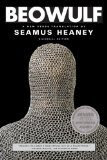
I have both the Seamus Heaney translation, which is the one which I believe is most often found in bookstores these days, and the Howell Chickering one. Both are facing page translations, and you wouldn't think there was too much of a difference between them, seeing as it's the same text.

However, there really is a difference. Seamus Heaney has tried, more or less, to hold to the alliteration of the original Beowulf, but has, as far as I can see, chosen to not reproduce some of the rest of the structure of the poem. There is also, in my opinion, a more casual feel to his translation. Most of the book is the poem, which is probably a plus for the causal reader. I know I liked it, being able to jump right into the poem, when I first got the book back in 2004.

Nowadays though, I prefer the style of the Chickering translation. He hasn't followed the alliteration scheme of the original, but the stress patterns seem to be there, as is the caesura of the lines. Also, more than half of the book is made up of the introduction and commentary about the poem. For me, this is a plus as he's included a pronunciation guide, poetic structure analysis (including examples) and other helpful information in the introduction. The pages of the poem include footnotes of emendations and disagreements over word corrections in the Old English as well.

I haven't made it as far as the commentary yet, being just over 1200 lines into the poem, but on a quick skim, I noted that it includes a detailed history of the manuscript history.

What I'd like to find for Beowulf is a translation that does what Tolkien did for the poem Sir Gawain And The Green Knight: His translation includes both the alliteration and the poem structure. Of the translations I've read, this has become my favorite (and not simply because it is one of the works of J.R.R. Tolkien this time).

So, what makes a good translation for you?

LinkWithin

Related Posts Plugin for WordPress, Blogger...