Showing posts with label books for review. Show all posts

Friday, December 30, 2016

New Arrival: Europe: Chained By History - Larry J. Hilton

For the first time in a few years I accepted a book for review, and it arrived in my mailbox today:

Europe: Chained By History
Larry J. Hilton
Newport Publishing
Copyright: 2015
978-0996786119

The amazon.com product description:
A Plea for Europe to form a United States of Europe
Europe: Chained by History is a groundbreaking book that uses history to make a compelling case for Europe to form a United States of Europe--or risk seeing the European Union come apart individually.
Using the history of Vienna from its inception to 1938, readers are invited to observe Western Europe from within this ancient city.
  • Where did historic rivalries among European nations begin?
  • How did the Enlightenment affect Europe and the United States?
  • What persistent darkness allowed Hitler to lead the word in to a second devastating world war?
  • What will it take for today's European Union to survive?
Author Larry J. Hilton explores these questions, and more, by using fascinating details about what it was really like to live in Vienna from the the first century through the days of hyper-inflation after World War 1.
Thought provoking and well researched, Europe: Chained by History radiates hope even as it details the formidable & political obstacles to European unity. In the end, a banking or ISIS crisis will force the issue.
As I said above, this is the first book for review that I've accepted in a few years now. I'm definitely looking forward to reading Europe: Chained By History.

Wednesday, October 12, 2011

Rin Tin Tin: The Life and the Legend - Susan Orlean

Rin Tin Tin: The Life And The Legend
Susan Orlean
Simon and Schuster
Copyright: September 27, 2011
978-1439190135

The Amazon.com product description:
He believed the dog was immortal.
So begins Susan Orlean’s sweeping, powerfully moving account of Rin Tin Tin’s journey from orphaned puppy to movie star and international icon. Orlean, a staff writer at The New Yorker who has been hailed as “a national treasure” by The Washington Post, spent nearly ten years researching and reporting her most captivating book to date: the story of a dog who was born in 1918 and never died.
It begins on a battlefield in France during World War I, when a young American soldier, Lee Duncan, discovered a newborn German shepherd in the ruins of a bombed-out dog kennel. To Duncan, who came of age in an orphanage, the dog’s survival was a miracle. He saw something in Rin Tin Tin that he felt compelled to share with the world. Duncan brought Rinty home to California, where the dog’s athleticism and acting ability drew the attention of Warner Bros. Over the next ten years, Rinty starred in twenty-three blockbuster silent films that saved the studio from bankruptcy and made him the most famous dog in the world. At the height of his popularity, Rin Tin Tin was Hollywood’s number one box office star.
During the decades that followed, Rinty and his descendants rose and fell with the times, making a tumultuous journey from silent films to talkies, from black-and-white to color, from radio programs to one of the most popular television shows of the baby boom era, The Adventures of Rin-Tin-Tin. The canine hero’s legacy was cemented by Duncan and a small group of others—including Bert Leonard, the producer of the TV series, and Daphne Hereford, the owner of the current Rin Tin Tin—who have dedicated their lives to making sure the dog’s legend will never die.
At its core, Rin Tin Tin is a poignant exploration of the enduring bond between humans and animals. It is also a richly textured history of twentieth-century entertainment and entrepreneurship. It spans ninety years and explores everything from the shift in status of dogs from working farmhands to beloved family members, from the birth of obedience training to the evolution of dog breeding, from the rise of Hollywood to the past and present of dogs in war. Filled with humor and heart and moments that will move you to tears, Susan Orlean’s first original book since The Orchid Thief is an irresistible blend of history, human interest, and masterful storytelling—a dazzling celebration of a great American dog by one of our most gifted writers. 
My own German Shepherd.

I've never seen a Rin Tin Tin show or movie, and yet I still knew of him, at least a little bit. I think everyone does. But, when I had the chance to read Susan Orlean's book, I jumped at the chance. My family has had German Shepherds off and on as long as I can remember, and I love the breed. In fact, at many points in the story I was remembering my own dog, Pixie, pictured at the right.

The book, Rin Tin Tin: The Life and the Legend is about many things, not just the original Rin Tin Tin dog, but his owner, Lee Duncan, his successors, the movie business, and American culture from the First World War to today, and even the history of the German Shepherd breed, for the legend of Rin Tin Tin spans them all. Rin Tin Tin was clearly so many things to so many people, including that dream of the perfect dog every kid wanted.

That's basically why I went for the book though: because I love German Shepherds. And, it was everything I wanted in a dog story as well as being so much more. There's the story of the actual Rin Tin Tin, which is wound about the story of his owner, and then the building of the legend which lives even today. This book is also the story of dogs in the movies as it included brief anecdotes about other dogs starring in the early silent  movies, the evolution of Lassie etc.

I really liked the layout of the book as it broke into the author's experiences as she was researching the history of Rin Tin Tin, Lee Duncan and his family, along with her reminiscences of Rin Tin Tin and the meaning he'd held for her as a child. One of the best moments (and one which reminded me of my dog when we first got her) was when she was delivering a puppy to it's new family. It's almost the same feelings I had about my dog then when we first got her. The way the whole book was laid out really shows how Rin Tin Tin was both a real dog and also a symbol of so much more for the last half a century or so, with all of the personal meanings that have been attached to him by different people.

Recommended for any dog-lover and maybe even for aficionados of the old silent movies and early TV series as there's plenty to fascinate both in Rin Tin Tin: The Life and the Legend. I certainly enjoyed the read and found the way the book continued past the life of the original dog into the legend he became to be a nice change from the inevitable sad ending to most animal stories.

This was an ARC copy that I was sent to read, but all the opinions are mine.

Friday, May 13, 2011

Amusing!

I finished reading a copy of Michelle Moran's novel Madame Tussaud on Sunday, which I'd borrowed in order to read, and on Monday, guess what came in the mail? A copy of Madame Tussaud.

I'd borrowed it because I'd promised to review the book well before it came out in February, and was feeling rather guilty. The vagaries of the post office prove themselves again! What I found amusing though, was the timing of the book's arrival. The day after I'd read and reviewed it.

Madame Tussaud is definitely a good read as are Michelle Moran's other novels.

Friday, February 18, 2011

Writing Horses - The Fine Art of Getting It Right - Judith Tarr

Writing Horses - The Fine Art Of Getting It Right
Judith Tarr
Book View Cafe
Copyright: November 2010

The amazon.com product description:
How far can a horse travel in a day? What does a horse eat? When is a brown horse really a sorrel (or a bay, or a dun)? What do tack and withers and canter mean?

In this long-awaited and much-requested book based on her "Horseblog" at Book View Café, author and horse breeder Judith Tarr answers these questions and many more. She looks at horses from the perspective of the writer whose book or story needs them as anything from basic transport to major plot device, and provides definitions, explanations, and links and references for further research--leavened with insight into the world of the horse and the humans who both use and serve him.

How fast can a horse run? What happens when a foal is born? How have humans and horses evolved together over the millennia? And above all, what mistakes do writers most often make when writing about horses, and how can the educated writer avoid them?

Here is a guide to the fine art of getting it right. 
 I got given a copy of this book through the LibraryThing Early Reviewer's program, and it wasn't for the Kindle, so if some of the things I mention in here do work better there, please correct me.

First off, I have to say I really liked reading Writing Horses. The chapters flowed together well and made sense - but then, Judith Tarr is a professional writer, and one who I've enjoyed reading many a time, most recently with her short story in Finding The Way and Other Tales of Valdemar.

One thing that's made very clear is that the author knows horses and has had a wide range of experiences with them, from riding to breeding and training. As I understand it, Writing Horses: The Fine Art Of Getting It Right is based on blog posts that Judith Tarr has written, which is where a lot of the informal style of the chapters seems to come from.

Although the book seems to be written mostly for those who've had little experience with horses, I found that it had plenty of tidbits for people with more experience as well (In my case several years of riding lessons years ago, and lots of reading). Much of it was basic, but, as I said, there were things in the book that a lot of the horse-care books I have didn't cover, such as some of the genetics and alternate terminology (eg, for Western riding, most of what I have is focused on English style). And then there's the bits such as on breeding and training too.

If you're interested in writing, the book is neat for another reason too - the way it's written serves to possibly spark ideas to work from as well. Possible problems to resolve - eg. horse health issues and the like.

Now, I was reading this book in e-pub format on my Kobo e-reader,and I found a couple of things that were slightly frustrating. Possibly they come from the book being formed from blog posts but perhaps it's also a limitation of the e-reader I'm using. Specifically I'm referring to the links scattered through the text. Some of them looked to be quite interesting potentially, but I couldn't get to them. There's no access to that kind of thing on the Kobo, and the urls weren't actually given anywhere for me to check them later on my computer. Same thing in the further references section. But, it's a minor thing really given the rest of the book, which is packed full of information and well illustrated with photos to boot.

Overall, I found Writing Horses: The Fine Art Of Getting It Right to be a very useful resource for anyone who likes horses and likes writing.

Monday, July 5, 2010

The Thousand Autumns Of Jacob De Zoet - David Mitchell

The Thousand Autumns Of Jacob De Zoet
David Mitchell
Random House
Copyright: 2010
978-1400065455

The Amazon.com product description:
In 2007, Time magazine named him one of the most influential novelists in the world. He has twice been short-listed for the Man Booker Prize. The New York Times Book Review called him simply “a genius.” Now David Mitchell lends fresh credence to The Guardian’s claim that “each of his books seems entirely different from that which preceded it.” The Thousand Autumns of Jacob de Zoet is a stunning departure for this brilliant, restless, and wildly ambitious author, a giant leap forward by even his own high standards. A bold and epic novel of a rarely visited point in history, it is a work as exquisitely rendered as it is irresistibly readable.

The year is 1799, the place Dejima in Nagasaki Harbor, the “high-walled, fan-shaped artificial island” that is the Japanese Empire’s single port and sole window onto the world, designed to keep the West at bay; the farthest outpost of the war-ravaged Dutch East Indies Company; and a de facto prison for the dozen foreigners permitted to live and work there. To this place of devious merchants, deceitful interpreters, costly courtesans, earthquakes, and typhoons comes Jacob de Zoet, a devout and resourceful young clerk who has five years in the East to earn a fortune of sufficient size to win the hand of his wealthy fiancée back in Holland.

But Jacob’s original intentions are eclipsed after a chance encounter with Orito Aibagawa, the disfigured daughter of a samurai doctor and midwife to the city’s powerful magistrate. The borders between propriety, profit, and pleasure blur until Jacob finds his vision clouded, one rash promise made and then fatefully broken. The consequences will extend beyond Jacob’s worst imaginings.  As one cynical colleague asks, “Who ain’t a gambler in the glorious Orient, with his very life?”

A magnificent mix of luminous writing, prodigious research, and heedless imagination, The Thousand Autumns of Jacob de Zoet is the most impressive achievement of its eminent author. 
I got sent an ARC copy of this book from Random House through work a few days before it hit the bookshelves, but I only just finished reading it yesterday. The timing was rather amusing, as I've been on a bit of a Japan and the Orient kick in my reading lately, so this was a book I was glad to start reading right away. It was also the first book by David Mitchell that I've read.

The Thousand Autumns Of Jacob de Zoet is one of those books where you're best off if you have long periods of time to read it and a chance to really focus on the characters and story. Otherwise, I found at least in my case that I was trying to figure out what was going on and what relation it had to the events of the story.

I found the story to be quite interesting, if unpredictable and the characters to be well developed and 'real'. I'm saying "unpredictable" for the story because every time I thought I could predict what kind of a story this was, I found that I was quite wrong. It's been over a day now, and I'm still trying to figure out if the ending of the book is a "happy ending" or not. In some ways it reads more like a memoir than a novel, but it's also the different threads of the story.

There's the main character, Jacob, but there are also a number of other viewpoint characters as well, such as Miss Abigawa and a lot of the other minor characters of the story. There were a few times when a new character was introduced abruptly that left me wondering who they were and why they were so important to the story, at least at that point.

I would like to say that David Mitchell has written a very well researched story in The Thousand Autumns Of Jacob de Zoet, at least it feels right, but I know very little about this time-period, culture and region. However, it does match up with what I've read in the other books so far. There's certainly a wealth of little details, but they don't bog the story down any.

Overall, I have to say that this was a really good book, and one I wouldn't hesitate to recommend to any lover of historical fiction.

Monday, May 31, 2010

Chiveis Book One: The Sword - Brian M. Litfin

The Sword: Chiveis Trilogy Book One
Brian M. Litfin
Crossway Books
Copyright: April 2010
978-1433509254

The amazon.com product description:
This novel of page-turning action and adventure poses the question, "If a society had no knowledge of Christianity, and then a Bible were discovered, what would happen?"
Four hundred years after a deadly virus and nuclear war destroyed the modern world, a new and noble civilization emerges. In this kingdom, called Chiveis, snowcapped mountains provide protection, and fields and livestock provide food. The people live medieval-style lives, with almost no knowledge of the "ancient" world. Safe in their natural stronghold, the Chiveisi have everything they need, even their own religion. Christianity has been forgotten—until a young army scout comes across a strange book.
With that discovery, this work of speculative fiction takes readers on a journey that encompasses adventure, romance, and the revelation of the one true God. Through compelling narrative and powerful character development, The Sword speaks to God's goodness, his refusal to tolerate sin, man's need to bow before him, and the eternality and power of his Word. Fantasy and adventure readers will be hooked by this first book in a forthcoming trilogy.
This book was sent to me through the Early Reviewers program on LibraryThing. First one of these that I've won.

That said, on to the review.

First of all, the book has an absolutely gorgeous cover. I know I don't often say anything about a book's cover, but now and again I do have to comment. That's part of what attracted me to The Sword. The art captures the feel of the story very well.

Unfortunately, despite the gorgeous cover, the book didn't quite live up to my expectations for the story. My first impression, once I'd made it past the actual catastrophe (which I did feel was well written and believable, especially given the tensions in the world today) was "needs a map". All the way through the first third of the book, I didn't have a clue if the story was in Europe or North America. Now, I suspect it's set in the environs around Paris, but I'm not certain.

I know a lot of people will disagree with me on this, but I felt that the religious issue was done in a bit of a heavy-handed manner, as though Christianity was the only obvious good choice. Given the reviews I saw on Amazon, I suspect therefore, that I'm more on the edges of the target market, being a fantasy lover, that Litfin wrote this book for the Christian fiction market.

Dodging that issue, although I think it would have been interesting to get more of the evolution of society and beliefs to the point where they're found in the book, there were some absolutely gorgeous scenes, such as the cathedral and the rest of the wilderness. I have to admit, I did like the Lost City the best, and the wreckage of the 21st century society found there. That was a very evocative set of scenes.

Overall, I liked The Sword, but I don't think it's going to be in my "favorite books" list.

Thursday, April 22, 2010

The Breath Of Allah - Tempest O'Rourke

The Breath Of Allah
Tempest O'Rourke
Synergy Books
September 1, 2009
978-0982314036

The Amazon.com Product Description:
The appearance of an ancient Koran—one of the original twelve transcribed after Mohammed’s death—sparks questions about the authenticity of current Islamic practices and teachings. A deadly race begins as the American who inherited the historic text works to keep it safe while being hunted by the CIA, Islamic terrorists, and Jewish Secret Police. As the death toll rises, a mysterious Muslim prophet appears—a prophet who might be the leader Islam needs to restore peace among its followers. Together, the American and the prophet endeavor to reveal the true meaning of Mohammed’s Breath of Allah, but to do so they must overcome the deadly agendas of extremist clerics and terrorists, who are willing to silence the true Koran at any cost.
The first thing I should say is that I was sent a copy of this book to read and review. That now said, on with the review:

The Breath of Allah is an exciting thriller, one I was surprised that I liked so much given my track record with such books in the past (not very good). The author,Tempest O'Rourke weaves together a very plausible future for the world, given the way things are going today, as the book is set ten years in the future. Might be interesting reading in 2020, to see how much of a forecast the book turns out to be. It's definitely not a world I want to be living in, either!

On the other hand, looking at the little told about Tempest O'Rourke's background on the back jacket of the book, it looks as though he knows what he's talking about in the story, adding another layer of plausibility to the character's actions and the world politics described.

There is an element of history to the book, but less so than I thought there would be, not that it really needed more. Aside from the prologue and the very end, which involves Lawrence of Arabia, the rest of the book is all concerned with the 'present day' of the story. There are numerous references to events of the recent past - Iraq, 9/11 etc however.

Although there are a lot of characters, for the most part they seem to be well created and integral to the story, especially the main characters. I would have liked more of the prologue, more of Lawrence, but that's possibly just me. I know it wasn't critical to the story being told after the introduction of the Koran.

I will say that the politics of the story probably won't be to everyone's liking. I found after a while that they got on my nerves a bit, given the number of times that statements like "liberal do-gooders" and other negative references of the sort are scattered throughout the story. But then, I notice things like that when I'm reading.

The final thing of the book is that the ending doesn't seem to be especially resolved. It does leave lots of room for sequels though.

If you like an exciting read, The Breath of Allah could be the perfect book for you. I give it four out of five stars.

Sunday, December 13, 2009

Samson's Walls - Jud Nirenberg

Samson's Walls
Jud Nirenberg
Paul Mould Publishing
Publishing Date: December 2009?
ISBN: 9781586901028

This is what I was sent from Carol Fass Publicity as the offer of the book for me to review (Copied and pasted from the initial e-mail):

Jud Nirenberg, as an organizer of human and civil rights efforts, has seen first-hand the destructive forces of inter-ethnic violence. His experiences color a dark vision of one of the Old Testament's most powerful stories in his new novel, SAMSON'S WALLS.

While
the United States tries once more to draw Israeli and Arab leaders to the negotiation tables, SAMSON'S WALLS shows readers a much older view of the same region. Binding the psychology of its characters to the socio-political context of ancient Canaan, the novel breathes life into Samson, Delilah and others who struggle to survive and to connect with others in a world full of divisiveness and violence.
samsons
In a Canaan where Philistines and Hebrews vie for dominance, it is important to know one's place. Samson is isolated in his, trapped by unusual rules and expectations. He was promised to his parents by an angel, destined to grow into a great man and make his people strong. Raised with Philistines for playmates, he aches to be a part of their world. At marrying age, he chooses a Philistine wife. When his new family denies him the acceptance he craves, he releases years of frustration and loneliness in blood.

Samson goes into hiding, seeking to make peace with his wife's people. Other young Hebrews soon join him, each with their own reasons for rebellion. Even while longing for peace, Samson leads this growing army. He is trapped by his successes and grows in fame and power, taking enemy territory. He is alone.

He tastes love when he meets Delilah, the unlikely prostitute-queen of a village in no-man's land. She is the opposite of the clannish divisions he hates, with unclear ethnic origins and leading a mixed community. They become intimate as Philistine spies gather around them. Samson and Delilah are ensnared in Samson's fight to fulfill his own heart's need despite his tribe's and God's expectations.

SAMSON'S WALLS is now in pre-production as an opera, to be initially performed in 2010 in Washington, DC. Music is being composed by Gregg Martin, with Nirenberg consulting on the libretto. See http://www.greggmartin.net/ for more information.

A Kindle version of the novel is available through Amazon, through Oak Tree Books. The paperback will also be available through Amazon and in select bookstores.
Now I've finished reading the book, it's December and I've been searching Amazon to find Samson's Walls there. All that comes up is the Kindle edition.

I've used the e-mail for the blurb for another reason as well: the copy of the book I was sent didn't have a jacket blurb for me to use, and not finding it on Amazon, I couldn't use that source either.

I have to say, I liked the story idea, although there were things I felt could have been fleshed out more, such as Samson's father and Delilah's motivations. Admittedly, I'm not overly familiar with the base story in the Bible, and maybe all that is made clearer there. There were just a few things brought up that made me go "what?" and then nothing more was made of that point, even though it seemed like something that could have been important.

Samson's Walls definitely caught my attention and kept it though, not letting me put the book down for any other books. I'm a fan of historical fiction, and this was a good one. The mix of groups, cultures and peoples worked to set up a vibrant and conflicted world, which fits with the story, and with what I know of the history of the era from reading textbooks.

It might be helpful for a reader to brush up on the biblical story of Samson and Delilah before reading this. At the least, it'll give you a shape for the story, to which Nirenberg will be adding colour and texture to the characters and the settings.

According to the publicity blurb I got sent, the story is going to be made into a theatrical/operatic production. That should be interesting to see!

Overall, I liked Samson's Walls quite a bit, but it's not going to be one of my favorite books of the year. Regardless, it was a good, but shortish read. If bible-based historical fiction is something you enjoy though, I'll recommend it.

Edited to add on January 29, 2010: The paperback version of the book is now available, and I've linked to the Amazon.com page for it.

Tuesday, November 3, 2009

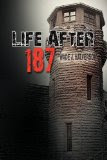
New Book Arrived: Life After 187 - Wade J. Halverson

An interesting package in the mail today turned out to be the book Life After 187 written by Wade J. Halverson, which was offered to me for review.

The book jacket blurb:

Sentenced to life in prison when he executes the men who murdered his wife, Kane Silver is singled out by the warden for his fighting ability. Along with inmates Valentino Lopez and Si’Ling Lee, Kane is drafted into service and forced to fight for money in high-stakes tournaments. But when the three friends escape during a New Year’s Eve match in Lake Tahoe—saving the warden’s life in the process—their situation becomes more complicated.

Their status undetermined, they vanish underground and sign on to help a young woman whose parents are being held by an Argentinean drug kingpin. Follow Kane and his friends as they compete and grow closer while rediscovering what it means to be free. From Lake Tahoe and the western United States to Costa Rica, Hong Kong, Buenos Aires, and Thailand, Life After 187 takes readers on an exhilarating ride filled with big money, intense action, justice, and the pursuit of honor.

Looks to be quite the exciting read.

Tuesday, October 13, 2009

Defenders of the Scroll - Shiraz

Defenders of the Scroll
Shiraz
iUniverse
Copyright Date: 2009
978-1440144776

The Amazon.com description:
A teenage boy.A dark wizard.A mystic scroll. And the fate of a world hangs in the balance. . . When Alex "the Axeman" Logan is pulled from his world to help young princess Dara save her kingdom from the Shadow Lord, he thinks there has been a mistake. He's a teen guitar player close to failing 11th grade, not some defender of the realm. All he has are some school books, his wits, and his love of fantasy movies. Overnight his life is history. Alex must confront the Shadow Lord and his minions when he is thrust into a land that has changed from a magical paradise to a barren, hopeless, helpless realm invaded by a dark army. But Alex is not alone. He has the help of Dara, a magic scroll, and a band of unlikely companions drawn from his own history books: a hardened Roman Legionnaire, a swift Japanese Samurai, a mighty African Warrior, a fiery Amazon Archer, and a spirited Shaolin Monk. Can Alex become more than he believes and lead his small band of Defenders to the Hall of Shadows, the birthplace of the Shadow Lord? The fate of the realm and everyone in it rests on him.

This is in many ways an absolutely spectacular book. Each page is set on the background of a rolled scroll, which is a little detail I've never seen done before. And yet, despite the darker background, the text is still clear and easy to read. Also spectacular are the full page illustrations of the events and adventures the characters go through.

I said that I thought the book was marketed to the Young Adult segment of the population when I first got it. Now, having read Defenders of the Scroll, I'd like to revise my guess a bit. It's definitely geared to teens and young adults, but also, I think, to the nine to twelve year old set.

The characters are an interesting mix, even though some of them felt fairly stereotyped at the beginning of the book. They soon develop (mostly) out of that though, and start to become their own characters. I like the way Alex becomes more aware of reality (despite the fact he's in a fantasy realm). I think he becomes a better person for it too.

Some of the characters are definite surprises, making you think one thing, while something entirely different is going on.

This book does have a sequel, something that wasn't even hinted at anywhere (until the last page), and as a result, leaves the story and many questions completely unresolved. Despite this, I found Defenders of the Scroll to be quite a good read, and I think the book deserves the many awards it has won. It's certainly the most original fantasy I've read in a while.

Sunday, September 13, 2009

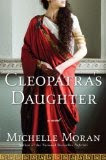
Cleopatra's Daughter - Michelle Moran

Cleopatra's Daughter
Michelle Moran
Crown
Copyright Date: 2009
978-0307409126

The amazon.com description:
The marriage of Marc Antony and Cleopatra is one of the greatest love stories of all time, a tale of unbridled passion with earth-shaking political consequences. Feared and hunted by the powers in Rome, the lovers choose to die by their own hands as the triumphant armies of Antony’s revengeful rival, Octavian, sweep into Egypt. Their three orphaned children are taken in chains to Rome; only two– the ten-year-old twins Selene and Alexander–survive the journey. Delivered to the household of Octavian’s sister, the siblings cling to each other and to the hope that they will return one day to their rightful place on the throne of Egypt. As they come of age, they are buffeted by the personal ambitions of Octavian’s family and court, by the ever-present threat of slave rebellion, and by the longings and desires deep within their own hearts.

The fateful tale of Selene and Alexander is brought brilliantly to life in Cleopatra’s Daughter. Recounted in Selene’s youthful and engaging voice, it introduces a compelling cast of historical characters: Octavia, the emperor Octavian’s kind and compassionate sister, abandoned by Marc Antony for Cleopatra; Livia, Octavian's bitter and jealous wife; Marcellus, Octavian’s handsome, flirtatious nephew and heir apparent; Tiberius, Livia’s sardonic son and Marcellus’s great rival for power; and Juba, Octavian’s watchful aide, whose honored position at court has far-reaching effects on the lives of the young Egyptian royals.

Selene’s narrative is animated by the concerns of a young girl in any time and place–the possibility of finding love, the pull of friendship and family, and the pursuit of her unique interests and talents. While coping with the loss of both her family and her ancestral kingdom, Selene must find a path around the dangers of a foreign land. Her accounts of life in Rome are filled with historical details that vividly capture both the glories and horrors of the times. She dines with the empire’s most illustrious poets and politicians, witnesses the creation of the Pantheon, and navigates the colorful, crowded marketplaces of the city where Roman-style justice is meted out with merciless authority.

Based on meticulous research, Cleopatra’s Daughter is a fascinating portrait of imperial Rome and of the people and events of this glorious and most tumultuous period in human history. Emerging from the shadows of the past, Selene, a young woman of irresistible charm and preternatural intelligence, will capture your heart.

The story starts out with the deaths of Antony and Cleopatra, then follows the life of their three children, Alexander, Selene and Ptolomy as they are forced to go to Rome and live in Octavian's family.

From the perspective of Selene, we meet Octavian (Augustus), Livia and a whole host of other Roman figures, including Julia, Octavian's daughter, and Marcellus, who is his heir. There's also Tiberius, the son of Livia.

This is a book that's good for both older teens and adults. There's nothing overly descriptive in terms of violence or sex, but the descriptions there are are enough to bring the scenes, characters and Roman lifestyle vividly to life. The settings of the story included the Colosseum, Capri, the Forum and the Palatine hill, among others.

There's slightly less of the descriptions of food, settings and scenery in Cleopatra's Daughter than there were in Michelle Moran's previous two books, but there's still enough to get a feeling for the world of Ancient Rome.

It's clear that the author loves ancient history, as she's done a wonderful job setting the stories she writes in that world: first ancient Egypt with Nefertiti and The Heretic Queen, and now the beginnings of Imperial Rome.

Reading Suetonius and Tacitus gave me a bit of a mental picture for some of the characters such as Julia and Livia, and I have to say, Michelle Moran's characterizations are vivid, and spot on with the ancient sources. She's woven a good story with a satisfying ending. I'll leave it up to you to decide if it's actually a "happy" ending. It does resolve all the plot points of the story though.

I really like the weaving of history and fiction in Cleopatra's Daughter, and the historical notes at the end of the book make it even better, as there she elaborates a bit on exactly what was historical fact, and which elements the author chose to add to the story. But, when I was reading it, I couldn't really tell them apart - mark of a good storyteller.

One thing Michelle Moran has done with her previous two books is inspire me to go looking for more information about the historical figures she's written about. Cleopatra's Daughter is no different.

I'm going to make this a double recommendation and suggest reading Jo Graham's Hand of Isis as well. The former is historical fantasy, while this one is historical fiction, but I think the two books go well together. Either way, Cleopatra's Daughter picks up where Jo Graham's book ended, almost exactly.

I loved Cleopatra's Daughter and I can't recommend it enough. Michelle Moran has written a book where the anticipation and the wait to read it has definitely been worth it (and the late nights reading).

Thursday, September 10, 2009

Cleopatra's Daughter Arrived

My copy of Michelle Moran's latest book, Cleopatra's Daughter just arrived in the mail today. Apparently it came around 8:30 this morning and I only just noticed it now. Forget finishing S. M. Stirling's Against The Tide Of Years for now, although I'll get back to that one next week. All other books have been dropped until I've finished reading this one.

The reviews I've seen on other blogs have been so promising on top of the way I loved her previous two books, so I've been anticipating this one a lot.

Sunday, September 6, 2009

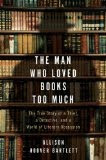
The Man Who Loved Books Too Much - Allison Hoover Bartlett

The Man Who Loved Books Too Much
Allison Hoover Bartlett
Riverhead Hardcover
Copyright Date: 2009
978-1594488917

The amazon.com description:
In the tradition of The Orchid Thief, a compelling narrative set within the strange and genteel world of rare-book collecting: the true story of an infamous book thief, his victims, and the man determined to catch him.

Rare-book theft is even more widespread than fine-art theft. Most thieves, of course, steal for profit. John Charles Gilkey steals purely for the love of books. In an attempt to understand him better, journalist Allison Hoover Bartlett plunged herself into the world of book lust and discovered just how dangerous it can be.

Gilkey is an obsessed, unrepentant book thief who has stolen hundreds of thousands of dollars' worth of rare books from book fairs, stores, and libraries around the country. Ken Sanders is the self-appointed "bibliodick" (book dealer with a penchant for detective work) driven to catch him. Bartlett befriended both outlandish characters and found herself caught in the middle of efforts to recover hidden treasure. With a mixture of suspense, insight, and humor, she has woven this entertaining cat-and-mouse chase into a narrative that not only reveals exactly how Gilkey pulled off his dirtiest crimes, where he stashed the loot, and how Sanders ultimately caught him but also explores the romance of books, the lure to collect them, and the temptation to steal them. Immersing the reader in a rich, wide world of literary obsession, Bartlett looks at the history of book passion, collection, and theft through the ages, to examine the craving that makes some people willing to stop at nothing to possess the books they love.

The Man Who Loved Books Too Much was a fascinating and thought-provoking read. When I think of robbery, I tend to assume the motive is money. This books showed a whole new set of motivations: stealing because the criminal loved expensive books and wanted to own them.

I loved the insight into the world of book collectors, and how the business works. It's honestly something I could see myself doing if I had the money. Personally, I think most of the book bloggers I've read are somewhat collectors (how else to explain the towering TBR piles most of us have, I don't know). I do know that I understand the need to have a particular book (and yet, not read it).

The Man Who Loved Books Too Much may be "about" a criminal, John Charles Gilkey, but it's as much about the man who tracked his crimes, Ken Sanders, and the efforts he went to. At the same time, we learn about the author, Alison Bartlett, as she gets increasingly involved with the people she's writing about.

I loved reading this book, and I couldn't put it down, finishing it after one AM the day I started reading it. The question the book asked me was "How far would you go to get that book?" There was no slow build-up. I was caught within the first few pages. The one thing I wish there was more information on was identifying books as valuable, such as what marks a first edition. Guess I'm going to have to do some research on my own now. I have to admit, I'm now curious.

The Man Who Loved Books Too Much is due out on September 17th according to amazon.com. What's more, it may well be the best biography I've read this year. Definitely a five star book.

Wednesday, September 2, 2009

ARC Arrival: The Man Who Loved Books Too Much

I've been receiving books to review for a couple of months now, but today's arrival is another first. This is the first advanced review copy of a book.

The book is The Man Who Loved Books Too Much by Allison Hoover Bartlett, and it's due out on September 17th, 2009.

The amazon.com description of the book is:
In the tradition of The Orchid Thief, a compelling narrative set within the strange and genteel world of rare-book collecting: the true story of an infamous book thief, his victims, and the man determined to catch him.

Rare-book theft is even more widespread than fine-art theft. Most thieves, of course, steal for profit. John Charles Gilkey steals purely for the love of books. In an attempt to understand him better, journalist Allison Hoover Bartlett plunged herself into the world of book lust and discovered just how dangerous it can be.

Gilkey is an obsessed, unrepentant book thief who has stolen hundreds of thousands of dollars' worth of rare books from book fairs, stores, and libraries around the country. Ken Sanders is the self-appointed "bibliodick" (book dealer with a penchant for detective work) driven to catch him. Bartlett befriended both outlandish characters and found herself caught in the middle of efforts to recover hidden treasure. With a mixture of suspense, insight, and humor, she has woven this entertaining cat-and-mouse chase into a narrative that not only reveals exactly how Gilkey pulled off his dirtiest crimes, where he stashed the loot, and how Sanders ultimately caught him but also explores the romance of books, the lure to collect them, and the temptation to steal them. Immersing the reader in a rich, wide world of literary obsession, Bartlett looks at the history of book passion, collection, and theft through the ages, to examine the craving that makes some people willing to stop at nothing to possess the books they love.
I've got to say it looks like an interesting book, and it's put me in a bit of a dilemma: what to read next? My choices are: Graceling by Kristen Cashore (a library book), Defenders of the Scroll (another book given to me for review), a book for one of the challenges I'm participating in, or one of the new history books I bought yesterday (Anthony Everitt's biography of Hadrian, or The Inheritance of Rome by Chris Wickham). All of the choices look really good.

Monday, August 31, 2009

Curse of the Tahiera - Wendy Gillissen

Curse of the Tahiera
Wendy Gillissen
Booklocker.com
Copyright Date: 2009
978-1601458391

The jacket description:
A journey through haunted forests, through dreams and time.
A story of love, magic and the power of forgiveness.
Rom, a young Tzanatzi outcast and Yldich, a mysterious Einache shaman are on the trail of an ancient curse.
Will they save their people from destruction?

Curse of the Tahiera is a book that was sent to me for review. I might not have bought the book on my own, had I seen it in a bookstore, but once I started reading it, I found that I really liked it, and I'm pleased there will probably be a sequel.

The story is suitable for more or less all ages from older teens to adults of all ages (provided they like fantasy). The book certainly has it's exciting moments! It managed to keep me up past one in the morning one of the days I was reading it.

It's different, because the true quest of the story doesn't become clear until well into the book, unlike those where the goal is known from the start. Makes for a different read, where I thought one thing was going to happen, when it all turned out to be caused by something else.

I found the start of Curse of the Tahiera to be a bit iffy, but I think that's as much because the book seemed at that point to almost be setting up to have some form of overarching message that I was supposed to be seeing. Soon enough though, I was into the story proper. The characters grew on me quickly and I had to know what was happening to them next. I still haven't quite shaken them out of my head yet.

The book starts out as a typical fantasy/journey, but takes on it's own dimensions and character quickly, growing into it's own storyline. Who is Yldich? What's going on in Rom's personal history? They're all questions that grow out of the beginnings of the journey, and need answering before the story is through. And the answers will take up much of the rest of the story. We're discovering the truth of the answers at the same time the characters are.

Wendy Gillissen has created an interesting landscape for Curse of the Tahiera, and the characters fit in their world well. I liked the way we learn the history of the world as the characters do and as the story goes by, rather than having it lumped in all in one place as is done quite often.

I should note that there are a couple of typos in the book, and a couple of times where things could have been phrased better, but overall, they don't affect the story (and I've seen the same things in other books, just not very often).

Overall, I'd say Curse of the Tahiera is definitely worth reading at least once, and I can see myself rereading it at some point in the near future.

Sunday, August 23, 2009

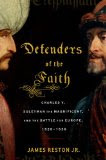
Defenders of the Faith - James Reston Jr.

Defenders of the Faith
James Reston Jr.
Penguin Press
Copyright Date: 2009
978-1594202254

The jacket description:
A bestselling historian recounts sixteen years that shook the world— the epic clash between Europe and the Ottoman Turks that ended the Renaissance and brought Islam to the gates of Vienna

In the bestselling Warriors of God and Dogs of God, James Reston, Jr., limned two epochal conflicts between Islam and Christendom. Here he examines the ultimate battle in that centuries-long war, which found Europe at its most vulnerable and Islam on the attack. This drama was propelled by two astonishing young sovereigns: Holy Roman Emperor Charles V and Turkish sultan Suleyman the Magnificent. Though they represented two colliding worlds, they were remarkably similar. Each was a poet and cultured cosmopolitan; each was the most powerful man on his continent; each was called “Defender of the Faith”; and each faced strident religious rebellion in his domain. Charles was beset by the “heresy” of Martin Luther and his fervid adherents, even while tensions between him and the pope threatened to boil over, and the upstart French king Francis I harried Charles’s realm by land and sea. Suleyman was hardly more comfortable on his throne. He had earned his crown by avoiding the grim Ottoman tradition of royal fratricide. Shiites in the East were fighting off the Sunni Turks’ cruel repression of their “heresy.” The ferocity and skill of Suleyman’s Janissaries had expanded the Ottoman Empire to its greatest extent ever, but these slave soldiers became rebellious when foreign wars did not engage them.

With Europe newly hobbled and the Turks suffused with restless vigor, the stage was set for a drama that unfolded from Hungary to Rhodes and ultimately to Vienna itself, which both sides thought the Turks could win. If that happened, it was generally agreed that Europe would become Muslim as far west as the Rhine.

During these same years, Europe was roiled by constant internal tumult that saw, among other spectacles, the Diet of Worms, the Sack of Rome, and an actual wrestling match between the English and French monarchs in which Henry VIII’s pride was badly hurt. Would—could—this fractious continent be united to repulse a fearsome enemy?

This is the first book I was offered for review. That said... On with the review:

The sixteenth century isn't the time period I'm the most familiar with, but overall, that didn't affect my reading of Defenders of the Faith. In fact, it may have helped.

Overall, I found the book to be very readable. Although I put it down a few times to read another book, I found that I didn't lose the thread of the narrative at all. James Reston has done a very good job of making sense of a large period of time and events that crossed continents, tying them together.

James Reston has also managed to avoid focusing on one side of the conflict or the other, spending equal time on the European rulers, although focused on Charles V, as he does on the Ottomans, telling of events from both perspectives.

As an overview of those tumultuous years, I'd definitely recommend Defenders of the Faith. It reminded me very effectively that there was more going on than just the events around Tudor England and Henry VIII (which seems to have become a very popular period to write about right now, both fiction and not). I've never seen the divorce of Henry VIII and Catherine of Aragon referred to as a "side plot" before, the way Reston does in the Foreword. This was, though, apparently one of the author's goals.

For all the positives of reading this book, there are a few things I'd quibble with in Defenders of the Faith. The biggest is the lack of citations and footnotes or endnotes. Time and again, Reston quotes writers of the period, but doesn't give names or sources. For example he describes a quote as "wrote one humanist" on page 20. Written by whom? and where can the quote be found? This happens again and again, and it makes the book stand out from other histories, even those written for the "popular" market. Other writers include citations, so why not this book? I will admit though, this is something I know bothers me, and I've commented on it in other reviews. It may not be an issue for other readers. There is, however, a good bibliography included, with both primary and secondary sources, as well as journal articles.

The other thing that I found a bit disappointing in Defenders of the Faith is that the illustrations are all in black and white. While I can see this not being a problem for the engravings included, there are also reproductions of a number of paintings of the various rulers, which it would have been nice to see in color.

Overall though, I really enjoyed reading this book, and I feel like I learned a bit more about history, and about this period in our history especially. I'd recommend this as a good overview/introductory book about the years between 1520 and 1536. Defenders of the Faith is going to stay on my shelves as part of my "permanent" collection of books.

Wednesday, July 29, 2009

First (and second) hardcopy book for review.

This is turning out to be a good day. I got my first hardcopy book in the mail for review today. The book is Curse of the Tahiera by Wendy Gillissen.

The jacket blurb:
A journey through haunted forests, through dreams and time.
A story of love, magic and the power of forgiveness.
Rom, a young Tzanatzi outcast and Yldich, a mysterious Einache shaman are on the trail of an ancient curse.
Will they save their people from destruction?
I've had e-books before, which I like (they don't take space on the shelf), but this feels "real". Mailbox Monday is going to be fun next week. I just couldn't wait that long to squeal in glee.

Edited to add:
Double reason to squeal: Defenders of the Faith, by James Reston Jr. just arrived as well (an hour or so later). This one will hold a special place as it was the first offer I got of a book to review. Not to mention that it simply looks interesting.

The jacket description:
A bestselling historian recounts sixteen years that shook the world— the epic clash between Europe and the Ottoman Turks that ended the Renaissance and brought Islam to the gates of Vienna

In the bestselling Warriors of God and Dogs of God, James Reston, Jr., limned two epochal conflicts between Islam and Christendom. Here he examines the ultimate battle in that centuries-long war, which found Europe at its most vulnerable and Islam on the attack. This drama was propelled by two astonishing young sovereigns: Holy Roman Emperor Charles V and Turkish sultan Suleyman the Magnificent. Though they represented two colliding worlds, they were remarkably similar. Each was a poet and cultured cosmopolitan; each was the most powerful man on his continent; each was called “Defender of the Faith”; and each faced strident religious rebellion in his domain. Charles was beset by the “heresy” of Martin Luther and his fervid adherents, even while tensions between him and the pope threatened to boil over, and the upstart French king Francis I harried Charles’s realm by land and sea. Suleyman was hardly more comfortable on his throne. He had earned his crown by avoiding the grim Ottoman tradition of royal fratricide. Shiites in the East were fighting off the Sunni Turks’ cruel repression of their “heresy.” The ferocity and skill of Suleyman’s Janissaries had expanded the Ottoman Empire to its greatest extent ever, but these slave soldiers became rebellious when foreign wars did not engage them.

With Europe newly hobbled and the Turks suffused with restless vigor, the stage was set for a drama that unfolded from Hungary to Rhodes and ultimately to Vienna itself, which both sides thought the Turks could win. If that happened, it was generally agreed that Europe would become Muslim as far west as the Rhine.

During these same years, Europe was roiled by constant internal tumult that saw, among other spectacles, the Diet of Worms, the Sack of Rome, and an actual wrestling match between the English and French monarchs in which Henry VIII’s pride was badly hurt. Would—could—this fractious continent be united to repulse a fearsome enemy?

LinkWithin

Related Posts Plugin for WordPress, Blogger...