Saturday, June 30, 2012

London Under - Peter Ackroyd

London Under by Peter Ackroyd
London Under
Peter Ackroyd
Nan A. Talese
Copyright: November 2011
978-0385531504

The amazon.com product description:
London Under is a wonderful, atmospheric, imagina­tive, oozing short study of everything that goes on under London, from original springs and streams and Roman amphitheaters to Victorian sewers, gang hideouts, and modern tube stations. The depths below are hot, warmer than the surface, and this book tunnels down through the geological layers, meeting the creatures, real and fictional, that dwell in darkness—rats and eels, mon­sters and ghosts. When the Underground’s Metropolitan Line was opened in 1864, the guards asked for permission to grow beards to protect themselves against the sulfurous fumes, and named their engines after tyrants—Czar, Kaiser, Mogul—and even Pluto, god of the underworld.

To go under London is to penetrate history, to enter a hid­den world. As Ackroyd puts it, “The vastness of the space, a second earth, elicits sensations of wonder and of terror. It partakes of myth and dream in equal measure.”
Ever thought that there was a world beneath the London we see today? Hidden, but just as alive and busy? No, I'm not describing another fantasy novel here, it's the world that Peter Ackroyd delves into in the book London Under.

For a fairly short book (240 pages), he covers a lot too. The book starts with the geology of London, some of the noted prehistoric finds and goes forward through time until the present. At the same time, he narrows in on specific aspects of London's underground history such as the various rivers and canals that have been covered over through the years.

Much of the book covers the medieval era to the present, although there are mentions of some of the prehistoric and Roman era discoveries that were made during the building of the sewers and the Underground (Tube) tunnels.

After the rivers, Ackroyd looks at the various sewer tunnels that were built during the middle ages to the eighteenth centuries and the effects they had on London, followed by the earliest versions of underground transport right up to the modern-day Underground system.

I'd be willing to bet that this book goes extremely well with Ackroyd's other book London: The Biography, which leads into my main complaint about London Under: the lack of maps. This book seems to be assuming that the reader is fairly familiar with London and it's geography. I for one am not, although I have visited a couple of times. Therefore, I found it rather hard to visualize the streets and intersections as Ackroyd mentions and follows them through the pages.

In spite of that, this is a book I have to recommend. It's fascinating, hard to put down and makes for a very different view of London and the history of that fine city. It also made me wish I could see some of the sights that the author mentions, such as the abandoned Underground stations where the posters are still on the walls, and have been since the early 1900's. The whole thing is written in a way that captures the imagination. I could see writers being inspired by reading London Under and setting up whole civilizations using what Peter Ackroyd set out.

That's something else that he focused on in this book. Peoples's views and stereotypes about the underground and tunnels as well as the people who used them and lived in them, as was the case for some people. It's interesting, the way it all ties into ideas about things like underground movements, religion, and class.

Overall, London Under is a book that definitely peaked my curiosity about London, it's history, present and future. I just wish there is a way I could see some of the things he described - most of it is closed off for various reasons, and of course, I live far too far away to get there. Definitely worth the read - and a fairly quick read too. Might be worth reading before the London Olympics to get a different view of the city.

Foundation: Collegium Chronicles One - Mercedes Lackey

The Collegium Chronicles: Foundation
Mercedes Lackey
DAW Books
Copyright: 2008
9780756405243

The amazon.com product description:
In this chronicle of the early history of Valdemar, a thirteen-year­old orphan named Magpie escapes a life of slavery in the gem mines when he is chosen by one of the magical companion horses of Valdemar to be trained as a herald. Thrust into the center of a legend in the making, Magpie discovers talents he never knew he had-and witnesses the founding of the great Heralds' Collegium.
I started re-reading this series the other day, Foundation, Intrigues and Changes so far (I'm onto the third book now) and what I'm finding is that the three books do really well when you read them back to back. It's more like one story in several volumes so far - rather different than her other story sets (Last Herald Mage, Heralds of Valdemar, Mage Wars etc.). This series the story picks up immediately after where it left off in the previous book. My last review for Foundation can be found here.

Mags is the typical character-type for a lot of the Valdemar books, reminding me of Skif and Talia, although even more so than they were. Even so, the story is interesting, though rather quick-reading. The time-period is about three generations after the time of Vanyel and Stefen, and it's a time of change, because the Heraldic Collegium - familiar to us from all of the later books, especially the Arrows trilogy, is being set up and formalized.

The main thing I found frustrating about reading Foundation is that the story built up very quickly at the end and then ended almost right after. It just didn't feel like anything was really resolved - instead being left until the next book in the series: Intrigues. Even so, I still enjoyed the read.

Friday, June 29, 2012

Friday Favourites: Your Favourite Book Meme?

Friday Favourites - a chance to rave about a favourite reading/book related topic each week.

Sometimes you just want a chance to rave about some favourite aspect of reading that doesn't really come up during regular blogging posts - that's what this is about. I'm willing to bet that at least some of those will come up one week or another.

This week I'm asking what your favourite book meme is. There are too many of them to count too: Library Loot, Booking Through Thursdays, "Waiting On" Wednesdays, Teaser Tuesdays, It's Monday! What Are You Reading? etc, etc.

What's your favourite, or do you have more than one? What draws you to a particular meme week after week? Memes about reading in general (Booking Through Thursdays)? or about a specific book each week ("Waiting On" Wednesday)?

My answer:
I seem to phase in and out of participating in the different book memes. I used to participate in most (all) of the memes I listed there, but not so much any more. Of them though, I'm going to have to say that my favourites are Library Loot and It's Monday! What Are You Reading?. Library Loot is the main one I participate in though these days, but I'm not all that regular a library user - hazard of working in a bookstore I think. It's Monday is one I want to participate in more often, but just don't seem to actually do.

Even with my track record, I'm always on the lookout for new book-related memes to read up on and try out.

What's your favourite?

Thursday, June 28, 2012

Beyond Snapshots: How to Take That Fancy DSLR Camera Off "Auto" and Photograph Your Life like a Pro - Rachel Devine and Peta Mazey

Beyond Snapshots: How to Take That Fancy DSLR Camera Off "Auto" and Photograph Your Life like a Pro
Rachel Devine and Peta Mazey
Amphoto Books
Copyright: March 20, 2012
978-0817435806

The amazon.com product description:
Ready to Capture Your Story with Beautiful Photos?

Let professional photographers Rachel Devine and Peta Mazey show you how to use that fancy DSLR to photograph the story of your life, from falling in love and having a baby, to the everyday moments that are no less precious. You’ll learn:

   • Common beginner mistakes and how to avoid them
   • How to take portraits of your children, friends, pets—even yourself
   • How to capture light to make your photos more dramatic
   • How to make colors pop, eyes sparkle, and skin tones more realistic
   • How to capture the uniqueness and wonder of your family, friends, and world

After all, why trust your memories to regular snapshots when with just a little knowledge, you can create beautiful photographs?

Be inspired to see the beauty around you, every day.
I got this book through NetGalley, back when it first came out. And, I have to say, I'm contemplating buying a copy of my own now that my NetGalley access has run out for this one. Beyond Snapshots is exactly what the beginner needs. I could have used it three years ago, but better late than never.

Rachel Devine and Peta Mazey have collaborated on the perfect book for someone who's just gotten their first DSLR camera. I know that when I was going through the manual for mine (an Olympus E-410), I found myself thinking "so what does that actually mean for my photos" when it pointed out the different controls and how to adjust them. Aperture, ISO, etc. all of that is thoroughly and clearly explained in the first half of this book. There are even a whole ton of things I haven't played with yet - different metering modes etc that they discuss.

The second half of the book though is where my interest faded a bit. It seemed to be geared mostly towards family photos and portraits in terms of subject matter and the how-to's. I'm sure it's easy enough to transfer the knowledge and techniques to other subjects, but I just didn't find the ideas that inspiring.

On the other hand, the first half of the book was so useful that I think it's worth it anyway. ISO charts, discussions of lighting and how the time of day changes the lighting quality - my copy was an e-book, but I want that half of the book in print just for reference!

One aspect of their approach that I found to be interesting and useful is that they both took each of the photos - one with a Canon camera and the other with a Nikon and the instructions are given for each. Not the most useful for me personally - my camera is an Olympus, but I believe that those two brands are the most popular and common.

Overall, I have to say that I found Beyond Snapshots to be a very useful book - as I said, it's perfect for those who are just switching from a point-and-shoot to a DSLR camera - and even with the former, I'd bet you'll find some handy tips to improve your photo-taking. Keep in mind though, I'm just an enthusiastic amateur when it comes to my camera.

Wednesday, June 27, 2012

Mud, Sweat, And Tears - Bear Grylls

Mud, Sweat, And Tears - Bear Grylls
Mud, Sweat, And Tears
Bear Grylls
William Morrow Publishing
Copyright: May 2012
978-0062124197

The amazon.com product description:
Bear Grylls has always sought the ultimate in adventure. Growing up on a remote island off of Britain's windswept coast, he was taught by his father to sail and climb at an early age. Inevitably, it wasn't long before the young explorer was sneaking out to lead all-night climbing expeditions.

As a teenager at Eton College, Bear found his identity and purpose through both mountaineering and martial arts. These passions led him into the foothills of the mighty Himalayas and to a karate grandmaster's remote training camp in Japan, an experience that soon helped him earn a second-degree black belt. Returning home, he embarked upon the notoriously grueling selection course for the British Special Forces to join the elite Special Air Service unit 21 SAS—a journey that would push him to the very limits of physical and mental endurance.

Then, disaster. Bear broke his back in three places in a horrific free-fall parachuting accident in Africa. It was touch and go whether he would walk again, according to doctors. However, only eighteen months later, a twenty three-year-old Bear became one of the youngest climbers to scale Mount Everest, the world's highest summit. But these were just the beginning of his many extraordinary adventures. . . .

Known and admired by millions as the star of Man vs. Wild, Bear Grylls has survived where few would dare to go. Now, for the first time, Bear tells the story of his action-packed life. Gripping, moving, and wildly exhilarating, Mud, Sweat, and Tears is a must-read for adrenaline junkies and armchair explorers alike.
This is the first of Bear Gryll's books that I've not enjoyed absolutely. Parts were really good - the parts about his youth and his family especially, but also the section on his testing, training and time in the SAS, but most of the book was focused on Bear's Everest expedition. O.K., now you've got to be saying that I'm nuts. I'm complaining about most of the book being about such an unusual and life-changing event. Why?

Facing Up - Bear Grylls
Simply put: it felt like duplication. The book Facing Up, which came out a few years ago was entirely about Bear's Everest expedition, so it's like I'd already read about half of Mud, Sweat, And Tears.

For the rest of the book, as I said, parts were great, but I guess I was just expecting something different. I wanted to know more about Man Vs. Wild, the T.V. show, as well as some of Bear's other adventures - some of which were shown in the photographic inserts. But those were barely mentioned in the text.

Still, it was well-written and engaging. As I said, I enjoyed learning more about Bear's family - both as a kid and now his family and children. I guess Mud, Sweat, and Tears just had a set of expectations around it that it didn't meet for me. Not my favourite, but still, I'm glad I read it.

Sunday, June 24, 2012

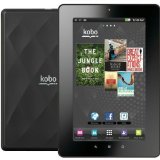
Kobo Vox Update - Android Marketplace (Google Play)

The biggest news involving the Kobo Vox in recent days is the latest system update. This one was big enough that Kobo sent out a mass e-mail a few days ago to announce it: access to Google Play, which also includes the Android Marketplace.

On turning on my Kobo Vox after the update was applied, I discovered that the GetJar marketplace icon which had originally come with the Kobo Vox was replaced by one called Play Store, which brought up the Google Play site. That's where the apps market is now.

At the same time, the Vox has added more Google integration to the system: the "Notifications" bar across the top now has a little e-mail icon, and on swiping it to see the notifications, it now states how many new e-mails I have. There are probably other integrations too, but that is the first one that came to my notice right off the bat.

A quick search discovers that my work-around for adding the Kindle app to the Kobo Vox is no longer needed. It's right there in the app-market at the top of the results list from a search for "Kindle for Android". I suspect the same thing is true for a lot of the work-arounds people have been using to date as well.

It may well be possible to read NetGalley titles easily on the Vox now. Aldiko Reader is easy to find and install, which is what NetGalley says to use with Android. I'd check it out but at the moment I have no titles requested.

I think this update is something that a lot of people have been waiting for. I know I have, if only so I don't have to say to people that the Vox doesn't have access to the Android Marketplace anymore.

Friday, June 15, 2012

Friday Favourites: Your Favourite Non-Reading Hobby?

Friday Favourites - a chance to rave about a favourite reading/book related topic each week.

Sometimes you just want a chance to rave about some favourite aspect of reading that doesn't really come up during regular blogging posts - that's what this is about. I'm willing to bet that at least some of those will come up one week or another.

This week I'm asking what your favourite non-reading hobby is. I'm sure that in terms of hobbies, reading takes the top slot :), but other hobbies are lots of fun too.

My answer:
I've tried a lot of hobbies, and they have tended to shift in terms of favourites and the amount of time I allot to them. In the past were hobbies like cross-stitch, drawing, calligraphy etc that are all year-round and engaging. All of which I still enjoy to an certain extent, but rarely do much of any more. Then there are the seasonal hobbies: gardening, snowshoeing, hiking etc. They're great, but you can only really do them at certain times of the year.

Right now, my priority (aside from reading) hobbies are those involved with yarn-craft. Mostly in this case, that refers to spinning and crochet, although I'd like to try dying some day, and I want to teach myself to knit. It just seems somehow that I have trouble figuring out the instructions for any particular stitch, and the motions don't feel as comfortable as crochet did immediately.

Of those two, I'm honestly not sure if spinning is more a favourite than crochet, or if it's the other way around. They're equally as portable - at least if I'm using the drop-spindle and not the actual wheel ;). I know one thing I love about them is the feeling of accomplishment I get from finishing something. And it doesn't tend to take forever to complete a project.

Spinning is, like photography, one of those hobbies I've stuck with. It has to have been five years or so now since I started using a drop-spindle and thane the wheel, and I'm still going strong. Other hobbies I've picked up for a while and then abandoned more or less completely, such as the time I did some soapstone carving. After a few months, it just got left.

That length of time in itself justifies spinning as being a favourite. Crochet is a more recent addition, but it's definitely got my interest. One of these days I'm intending to combine the two and actually do some crochet with some of the yarn I've spun. To date, I haven't had the confidence to try much crochet with my handspun. I've been sticking with the commercial stuff, at least partially because it's more predictable.

So, what's your favourite non-reading hobby?

Friday, June 8, 2012

Friday Favourites: Your Favourite Book for May

Friday Favourites - a chance to rave about a favourite reading/book related topic each week.

Sometimes you just want a chance to rave about some favourite aspect of reading that doesn't really come up during regular blogging posts - that's what this is about. I'm willing to bet that at least some of those will come up one week or another.

This week I'm asking what your favourite book from last month was.

My answer is, after some thought, True Strength: My Journey From Hercules To Mere Mortal - And How Nearly Dying Saved My Life by Kevin Sorbo. My full review is here. Having been a fan of the show Hercules: The Legendary Journeys since it was on the air - I still watch the DVD sets on occasion, I picked up the book out of curiosity.

I've never been a big fan of actors' biographies and autobiographies before, but this one stood out as being downright inspiring to read. What Kevin Sorbo went through, and the process to his recovery was amazing, and the way he held up to it all...

True Strength is, to me, a book that anyone going through a tough spot in their life might gain some benefit from, be it thanks to illness or bad luck, it's bound to make you appreciate just how wonderful life is.

What was your favourite book from the month of May?

Friday, June 1, 2012

Friday Favourites: Your Favourite Period in History?

Friday Favourites - a chance to rave about a favourite reading/book related topic each week.

Sometimes you just want a chance to rave about some favourite aspect of reading that doesn't really come up during regular blogging posts - that's what this is about. I'm willing to bet that at least some of those will come up one week or another.

This week I'm asking what your favourite period of history is.
Please leave either your response in the comments or a link to your response.

I picked this question for this week based on both the movies I've been watching lately (War Horse and Last of the Mohicans) and the last book I finished (Diana Gabaldon's Outlander). However, the question itself isn't specifically about what time periods you like to read, instead it's more general, about your favourite period of history in general.

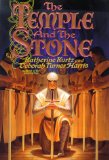
For myself it's about an even split between Classical (Roman and Greek) and Medieval History. I know for medieval history it was an interesting start - I was inspired to take a couple of general Medieval History courses because I'd been reading some historical fiction and and wanted to find out how much of the story was based on truth. I think the novel in question was Katherine Kurtz's The Temple and the Stone, or perhaps the sequel, The Temple and the Crown. I was lucky enough to have a really good teacher who really sparked my interest.

I don't remember what caught my interest in Greek and Roman history though, but that was what I decided to major in, and I've found it fascinating ever since. I'm still buying books on the subject, along with medieval history as well as borrowing them from the library.

All I know is I find reading about and researching both periods to be absolutely fascinating even after getting a degree in the subject. What really catches my eye with both is the little details about every-day life, crafts, food and the like.

What's your favourite period of history, and why is it so fascinating to you?

Thursday, May 31, 2012

Outlander - Diana Gabaldon

Outlander
Diana Gabaldon
Dell
Copyright: 1992
978-0440212560

The amazon.com product description:
Claire Randall is leading a double life. She has a husband in one century, and a lover in another...

In 1945, Claire Randall, a former combat nurse, is back from the war and reunited with her husband on a second honeymoon--when she innocently touches a boulder in one of the ancient stone circles that dot the British Isles. Suddenly she is a Sassenach—an "outlander"—in a Scotland torn by war and raiding border clans in the year of our Lord...1743.

Hurled back in time by forces she cannot understand, Claire's destiny in soon inextricably intertwined with Clan MacKenzie and the forbidden Castle Leoch. She is catapulted without warning into the intrigues of lairds and spies that may threaten her life ...and shatter her heart. For here, James Fraser, a gallant young Scots warrior, shows her a passion so fierce and a love so absolute that Claire becomes a woman torn between fidelity and desire...and between two vastly different men in two irreconcilable lives.
Outlander is the first book by Diana Gabaldon in this series, which now comprises ten or eleven books, including the spin-off series about Lord John Grey. There's also the graphic novel, The Exile, which retells the first half of Outlander, but from Jamie's perspective rather than Claire's.

I've read Outlander a few times now, but it has been a few years since the last read, so it was a bit like coming to the book fresh again - I'd forgotten a lot of the details. I also noticed a few different things about the book too - including just how descriptive it is. Diana Gabaldon has managed to make this a very visual book in the way she wrote it. Something I quite enjoyed, as it made the unfamiliar details of the landscape, clothing and peoples faces very vivid. Rather than bogging down the storyline, I found that all the details just made it better.

Not only that, but the author has a knack for making you laugh. There were so many different points where I found myself laughing - especially at bits of dialogue and some of Claire's thoughts. One of my favourites from the first pages of the book:
Dinner the night before had been herring, fried. Lunch had been herring, pickled. And the pungent scent now wafting up the stairwell strongly intimated that breakfast was going to be herring, kippered.
The entirety of Outlander is from the perspective of Claire, and it's kind of neat to see historical events honestly through modern eyes (or relatively modern as the case is). Too often in historical fiction I've found that the characters feel as though they're modern characters in ancient dress. In this case, that's not an issue as that is exactly what Claire is. She's been transported from 1945 to 1743, so her modern attitudes and knowledge works.

Honestly, this book is a bit hard to categorize. At first glance and the blurb it seems as though Outlander is a historical romance, but on reading it, the book doesn't fit that pattern at all, but at the same time, it's not quite a straight on historical fiction piece either, as that would exclude the time-travel. I just call it fiction and don't try to categorize it too hard, rather I just enjoy the story and it's many focuses.

The first time I read Outlander, I didn't realize that it was the start of a series. I only discovered that fact after I finished the book, and then I was going away for several weeks. I remember finding it hard to settle for any of the books I had, wanting to find the sequels to this one, but having to wait until I got home again. I've got something of the same sort going on right now, as I no longer own the middle books in the series, just the first one (kept because it's a signed copy) and the last few.

If you haven't read Outlander yet, and you like good historical fiction, I'd definitely suggest giving it a try. All I can say is that I've loved reading it several times over now, and I'd love to one day go to Scotland and actually see the place for myself.

Friday, May 25, 2012

Friday Favourites - Your Favourite Cover Artist?

Friday Favourites - a chance to rave about a favourite reading/book related topic each week.

Sometimes you just want a chance to rave about some favourite aspect of reading that doesn't really come up during regular blogging posts - that's what this is about. I'm willing to bet that at least some of those will come up one week or another.

This week I'm asking who your favourite cover artist is. It's a question I'm curious about as despite the saying "don't judge a book by it's cover", everyone does so to a certain extent.

Please leave either your response in the comments or a link to your response.

My answer is:
I've got three favourite cover artists actually.
There's Jody A. Lee, who's done the art on a lot of the books I've read. It's gotten to the point where I can see a book and say "that's a Jody A. Lee cover" before I check the book to be sure. Typically her covers are usually on DAW books. I've noted her artwork on the following to date: Micky Zucker Reichert's Renshai books and  the Valdemar books by Mercedes Lackey (and also some of her other titles too), and a number of other authors and titles. She's actually about the only cover artist I can recognize like this - her work is rather distinctive and doesn't change from author to author or series.

My second favourite isn't technically a cover artist to the best of my knowledge: Alan Lee. I love his Lord of the Rings artwork, which was used by HarperCollins for some editions of The Lord of the Rings. Until I checked though just now, I honestly thought their covers for the History of Middle-Earth series were Alan Lee paintings as well. Turns out that they're actually John Howe's artwork instead - my other favourite for Tolkien-themed artwork. There's just something about the atmosphere that Alan Lee manages to invoke in his paintings that's perfect for Middle-Earth in my mind.

The third cover artist on my list is actually juggling for top place: the cover artist for the trade-paperback editions of Hand of Isis and Black Ships (or so I'm guessing - my copy of Black Ships seems to have disappeared again). Actually, as I think I've said before, Hand of Isis is a book I picked up on the strength of the cover alone.

Not only that, but the cover for this edition of Hand of Isis holds place as my all-time favourite piece of cover art, as I noted in a previous Friday Favourites post. There's just something about the way Debra Lill has done these two covers that I absolutely love. I'd be curious to see any other cover art of hers too and see if this particular style is something that's typical of all her work or something specific to her Jo Graham covers.

So, who's your favourite cover artist, and why?

Wednesday, May 23, 2012

Library Loot - May 22


This past week Library Loot has been hosted by Marg at The Adventures Of An Intrepid Reader. I'll admit that I haven't been a regular at my local libraries, but I went in to clean out the Ancient Greece section today. The resulting bag contained:


Oxford Archaeological Guides: Greece 
Christopher Mee & Anthony Spawforth

The amazon.com product description:
Greece, with all its temples, cities, and sanctuaries created by Europe's most formative ancient civilization, is a must-see for the archaeological traveler. This valuable new addition to the acclaimed Oxford Archaeological Guides series provides coverage of all the main archaeological sites in Greece, ranging from prehistory to the sixth century AD. The individual sites are arranged by region, and include Philip's Tomb at Vergina, the Palace complex at Mycenae, the Temples of the Acropolis, the Hellenistic city of the Messene, and the Roman colony of Corinth. Also included in the book are 'partner factor' ratings that rank the most worthwhile sites for travelers to visit during their stay. An up-to-date introduction surveys Greece's landscape, history, and archaeology from the Neolithic period to the end of antiquity, and places the sites in their cultural context. Finally, there is a chronology for reference and a glossary of essential terms.
History of Greece From The Beginnings To The Byzantine Era
Hermann Bengtson. Translated by Edmund F. Bloedow

The amazon.com product description:
This translation of the fifth edition of Hermann Bengston's masterly and compendious "Griechische Geschichte" is written in an accessible, stimulating style. It is outstandingly comprehensive and cover the period from the Early Bronze Age right through to the Byzantine era.
Ancient Greece From Prehistoric To Hellenistic Times
Thomas R. Martin

The amazon.com product description:
Using primary sources the political, military, social, cultural and religious histories of Ancient Greece are covered. There are relevant time lines, maps, plans and photographs. Particular attention is also given to the society, literature and architecture in its golden age.
The title above was the book I'd gone to the library for. The rest of the bag were just bonuses.

The Oxford History Of The Classical World
John Bordman, Jasper Griffin and Oswyn Murray

The amazon.com product description:
From the epic poems of Homer to the glittering art and architecture of Greece's Golden Age to the influential Roman systems of law and leadership, the classical world has established the foundations of our culture, as well as many of its enduring achievements. Astonishingly in-depth in its coverage of the entire 1000-year history of the classical world and richly illustrated, The Oxford History of the Classical World offers the general reader the definitive companion to the Graeco-Roman world, its history, and its achievements.
The first volume, Classical Greece and the Hellenistic World, covers the period from the eighth to first centuries B.C., a period unparalleled in history for its brilliance in literature, philosophy, and the visual arts. It also treats the Hellenization of the Middle East by the monarchies established in the area conquered by Alexander the Great.
The second volume, Classical Rome, covers early Rome and Italy, the expansion of the Roman republic, the foundation of the Roman Empire by Augustus, its consolidation in the first two centuries A.D., and the later Empire and its influence on Western civilization.
The editors--three eminent classicists, John Boardman, Jasper Griffin, and Oswyn Murray--intersperse chapters on political and social history with chapters on literature, philosophy, and the arts, and reinforce the historical framework with maps and chronological charts. The two volumes also contain bibliographies and a full index, as well as color plates, black and white illustrations, and maps integrated into the text.
The contributors--thirty of the world's leading scholars--present the latest in modern scholarship through masterpieces of wit, brevity, and style. While concentrating on the aspects essential to understanding each period, they also focus on those elements of the classical world that remain of lasting importance and interest to readers today. Together, these volumes provide both a provocative and entertaining window into our past.
The Oxford Illustrated Prehistory Of Europe
Barry Cunliffe

The amazon.com product description:
When a melting Swiss glacier recently revealed the body of a hunter millennia old, the world sat up and took notice. Here, in his well-preserved arrows, tools, and leather garments (not to mention his own remains) was a rare glimpse of life in prehistoric Europe, and it captured the public imagination. Elsewhere more obvious remnants of the pre-classical past have long been objects of fascination: the megaliths of northwestern Europe, the palaces of Crete, the mysterious cave paintings of France. Now archeologist Barry Cunliffe and a team of distinguished experts shed light on this astonishing, long-silent world in a comprehensive and lavishly illustrated account.
Ranging from the earliest settlements through the emergence of Minoan civilization to the barbarian world at the end of the Roman Empire, The Oxford Illustrated Prehistory of Europe provides a fascinating look at how successive cultures adapted to the landscape of Europe. In synthesizing the diverse findings of archeology, the authors capture the sweeping movements of peoples, the spread of agriculture, the growth of metal working, and the rise and fall of cultures. They provide intriguing insight on the Minoan and the Mycenean past underlying classical Greek history, and on the disasters that destroyed Minoan civilization. They explore the increasingly sophisticated societies of northern Europe, revealing surprisingly far-reaching trade between different areas. The peoples of Bronze Age Denmark, for instance, sent amber to Germany in return for scarce metal, while new technologies spread widely across the continent. The book continues through the end of the Roman Empire, exploring the barbarian world beyond Rome's northern frontier.
For centuries, we knew little of the European civilizations that preceded classical Greece or arose outside of the Roman Empire, beyond ancient myths and the writings of Roman observers. Now the most recent discoveries of archeology have been synthesized into one exciting volume. Featuring hundreds of stunning photographs (many in full color), this book provides the most complete account available of the prehistory of European civilization.
 I'm laughing at myself with this last book, as it turns out that I already have it, and in a more recent edition too. Not the first time it's happened, nor will it be the last, I'm sure.

Either way, these books were not borrowed with the intent to read, but as reference material to look things up in. I'm a bit frustrated right now, because I thought I had more information in my collection than I actually do. On the other hand, some of the books I'm thinking of might be in storage, so I do still have them. I just can't remember for sure.

Saturday, May 19, 2012

Saturday Snapshots - May 19

Saturday Snapshots is a fun non-book-related meme hosted by Alyce of At Home With Books each week. The idea is to post a photo that you, a friend, or family member has taken. The photos can't simply be taken randomly off the internet, and must also be family-friendly. Within those restrictions though, it's easy and lots of fun.

This week I'm digging back into my archives again. I think this one was taken with my current camera, but I'm honestly not sure anymore. Still, it's a subject I want to take more of in the future. Bees and flowers are a ton of fun to photograph, and somewhat challenging.


I quite like the way the depth of field worked out, although I'm sure this was taken on auto mode. Just luck.

Really though, I need to get back out and take more photographs, or at least get the current crop off of the camera card soon.

Friday, May 18, 2012

Friday Favourites: Your Favourite Cookbook

Friday Favourites - a chance to rave about a favourite reading/book related topic each week.

Sometimes you just want a chance to rave about some favourite aspect of reading that doesn't really come up during regular blogging posts - that's what this is about. I'm willing to bet that at least some of those will come up one week or another.

This week I'm asking what your favourite cookbook book is.

Please leave either your response in the comments or a link to your response.

My answer:
I`m finding this one to be an extremely challenging one to answer, simply because I love a lot of the cookbooks I have - spending time in the kitchen is a ton of fun. Last year I did manage to narrow the list of my favourites down to five.

I`m particularly partial to Mark Bittman, Jamie Oliver and Michael Smith's books, although I like a number of other authors as well. I wonder if it's the approach they take. None of them are particularly formal in how the recipes are done, nor the the food always super-fancy. It's as likely to be something simple and tasty - comfort food as it were.


When I was writing before, I wasn't as into watching the various cooking shows, so that wasn't shaping my perceptions as much. Now it is more, which is one of the reasons I love Jamie Oliver and Michael Smith as chefs. Well, that and also the fact that their recipes almost never fail me. Whether it's a soup, a casserole or even a drink, it is usually absolutely delicious.

Narrowing things down to one cookbook though, I'm going to have to say it's The Best of Chef At Home by Michael Smith, just based on his approach to cooking. It's inspiring to say the least. Every recipe has some explanation as to why you do something in a particular way, as well as some form of variation to change the flavour. Essentially, it seems to me as though I'm getting double the recipes for my money.

I really love the way he encourages experimentation in the kitchen and with cooking. I'll admit that I'm watching a lot of the Chef At Home T.V. show these days and every single episode I've seen has me wanting to get into the kitchen and try something. But, I get that feeling from the book(s) too. And, I've started experimenting too - using the book for inspiration. Even for something as simple as a salad dressing, or a way to jazz up some carrots.

The most recent successful recipe from this book was an incredible mushroom soup, though I just found a salad dressing I have to try - one of the variations on the salad dressings: a raspberry salad dressing.

But for me it just comes down to the approach that Michael Smith takes: relaxed and fun, family oriented cooking. There's no stress, no need to get it "right" as long as it tastes good, and for me, that works to get me into the kitchen and trying new things.

The things I like about the blue Chef At Home book are true of all his cookbooks too, and the one to the left here, may soon overtake the first one as my favourite. At the moment, it's simple familiarity that keeps it there, and I'm trying new recipes from this one too all the time. So far, my favourite has been the baked acorn squash recipe. It takes a bit of time, but is delicious and goes well with a lot of different meats too.

What's your favourite cookbook?

Sunday, May 13, 2012

Kobo Vox - Longer Term Impressions

It's now been several months since I posted both my First Impressions review of the Kobo Vox and my Further Impressions. Since then, I've added a couple of tutorials: Installing the Overdrive Media Console and Installing the Amazon Kindle app.

While I've been a fan of the Kobo e-reader from day one, since I got the Kobo Vox, I haven't even charged up the old Wi-Fi model once. As far as I'm concerned, low battery-life and all, the Vox trumps the older models completely. I can't say anything about the Touch model though.

 I've done a fair bit of reading on it too. Both of Michael R. Hicks books - through the amazon Kindle app, which works like a charm - and several others too.

Daylight or night, it works wonderfully with all kinds of lighting - definitely better than my smartphone screen.

Reading back, I noticed that I commented on the Live Wallpapers having a tendency to slow my Vox down back in my Further Impressions post. Maybe it was just that one wallpaper, because I've since been running a spectacular one, with no problems in the last couple of months. Finding and installing the wallpapers though has been a challenge, because most of them are linked from the Android Marketplace, which it seems, the Vox still has no access to. On the other hand, I haven't tried in recent months, but at the same time I haven't heard otherwise either.

The libraries have been a bit of a disappointment though. Nothing to do with the Overdrive Media Console app or how it works however. That side of things has worked - no problems. It's just that the libraries don't seem to have the kind of books I'm interested in reading - mostly science fiction or fantasy novels.

Loading on non-Kobo E-books is still an absolute breeze. Drop the e-pub file onto your micor-SD card and insert it into the Vox. Open the Library, and your e-reader does the rest of the job for you. Believe me, about half my library is on there from that method.

The feature I'm starting to take more advantage of now though is the Pulse, that social aspect of reading which has been integrated into the Kobo Vox interface. Surprisingly, at least with the super-popular books like Game of Thrones, it's lots of fun, because you can keep track of who else is reading the book at the same time, and how many times the book has been read. Not to mention reading other people's comments about the book. It's possible to read all the comments at once (choosing one option will let you avoid spoilers too) or to see comments and "likes/dislikes" for particular pages. It's kind of neat to know that somebody has commented for the same page you're reading. I'm thinking of it a bit like a world-wide book club for the book you're reading. Unfortunately, it only works with the books you buy from Kobo.

At the same time, I'm integrating Facebook into my reading a bit more. I only just managed to get the Facebook app (the screen just past the home screen) to let me log in properly, and I've been finding that the Facebook integration with Kobo is a bit finicky, and not always letting me do things like posting quotes. On the other hand, that could be my unfamiliarity with both Facebook and that segment of Kobo usage talking.

On a different topic, recently Dark Horse Comics has announced a partnership with Kobo to bring their graphic novels to the Kobo Vox. Even though I haven't tried reading a full graphic novel on the Kobo Vox, I have seen what they look like. It's spectacular! The pages are vibrant and clear, with readable text and crisp images.

Overall, I've had nothing but good experiences with my Kobo Vox over the past several months. Certainly the "new gadget" appeal has never worn off in my eyes.

I have however, noticed a change in how I read, using the Vox as compared to reading a paper book or even on the older Wi-Fi model. Before, I would read in longer segments of time, even hours at a time. Now, when I'm reading on the Vox, I find myself switching over to playing a game after only a few minutes of reading. Just the temptation of having the games available?

LinkWithin

Related Posts Plugin for WordPress, Blogger...